
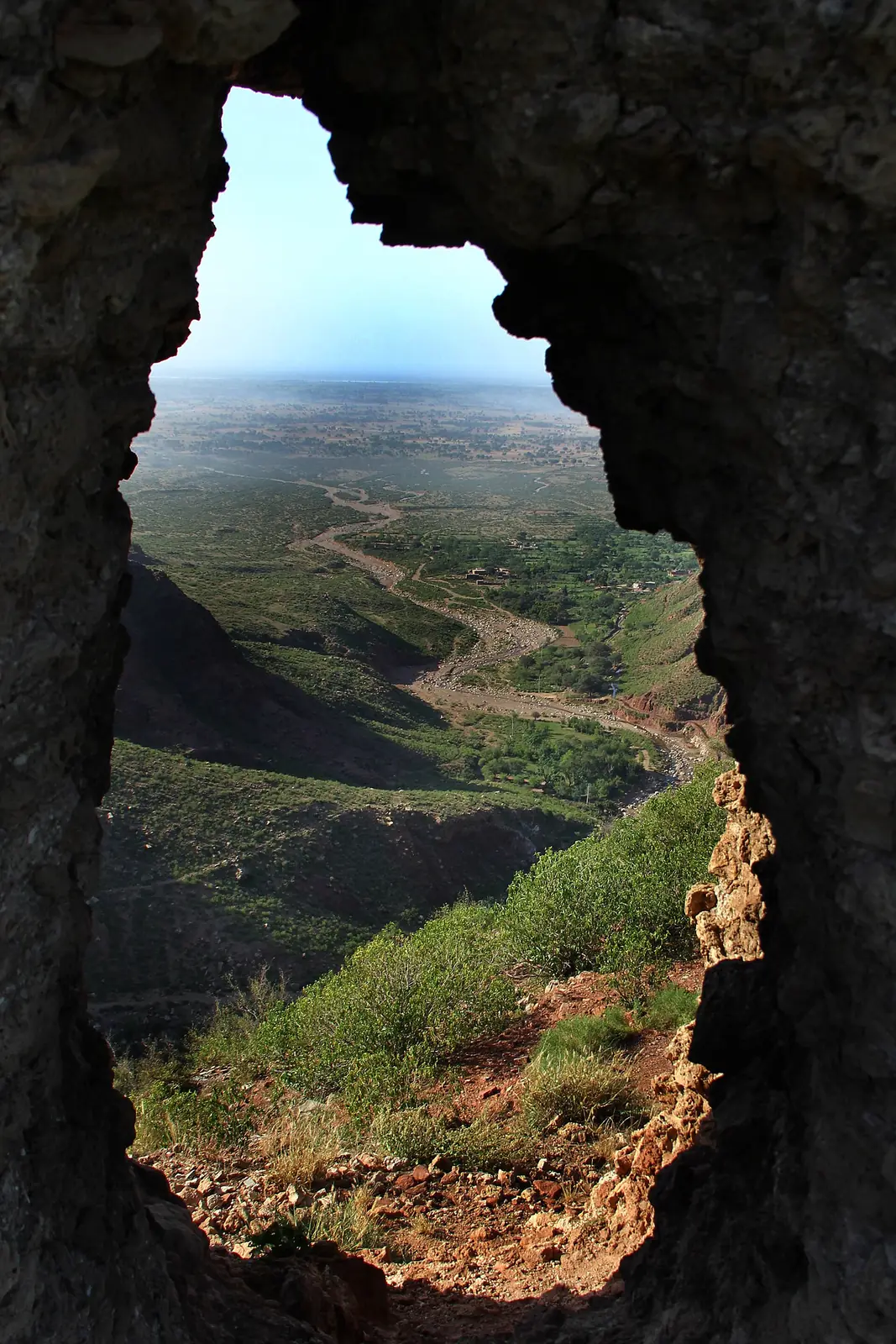
Mahmud took the Shahi fortress of Nandana and routed the Kashmiri relief army; the Shahis lost the Salt Range and fell back toward the hills.
01The pass and the fort
After Anandapala’s death the Shahi king Trilochanapala held Nandana, a fortress on a spur of the Salt Range above the Jhelum plain, where al-Biruni later measured the earth’s radius. His son Bhimapala, whom Utbi calls Bhim the Fearless, blocked the pass with elephants and earthworks. Mahmud forced the pass in a hard fight and laid siege to the fort, which surrendered. Trilochanapala had gone to seek help from Sangramaraja of Kashmir, who sent his commander Tunga with a large army.
02Kalhana’s lament
Kalhana tells the rest in the seventh book of the Rajatarangini. Tunga, proud after an easy skirmish, would not listen to Trilochanapala, who knew the Turks and urged caution. When Hammira, as Kalhana names Mahmud, came on, the Kashmiri army broke. Trilochanapala fought on with courage, but the Shahi kingdom was gone. Kalhana, writing more than a century later in a Kashmir that had sheltered Shahi princes, says the Shahi glory vanished so completely that one may doubt it ever existed. Trilochanapala was killed in 1021 and his son Bhimapala died in 1026, the last of the line.
Nandana ended the Hindu Shahis as a kingdom and opened the Punjab to the Ghaznavids, who made Lahore their Indian capital.