
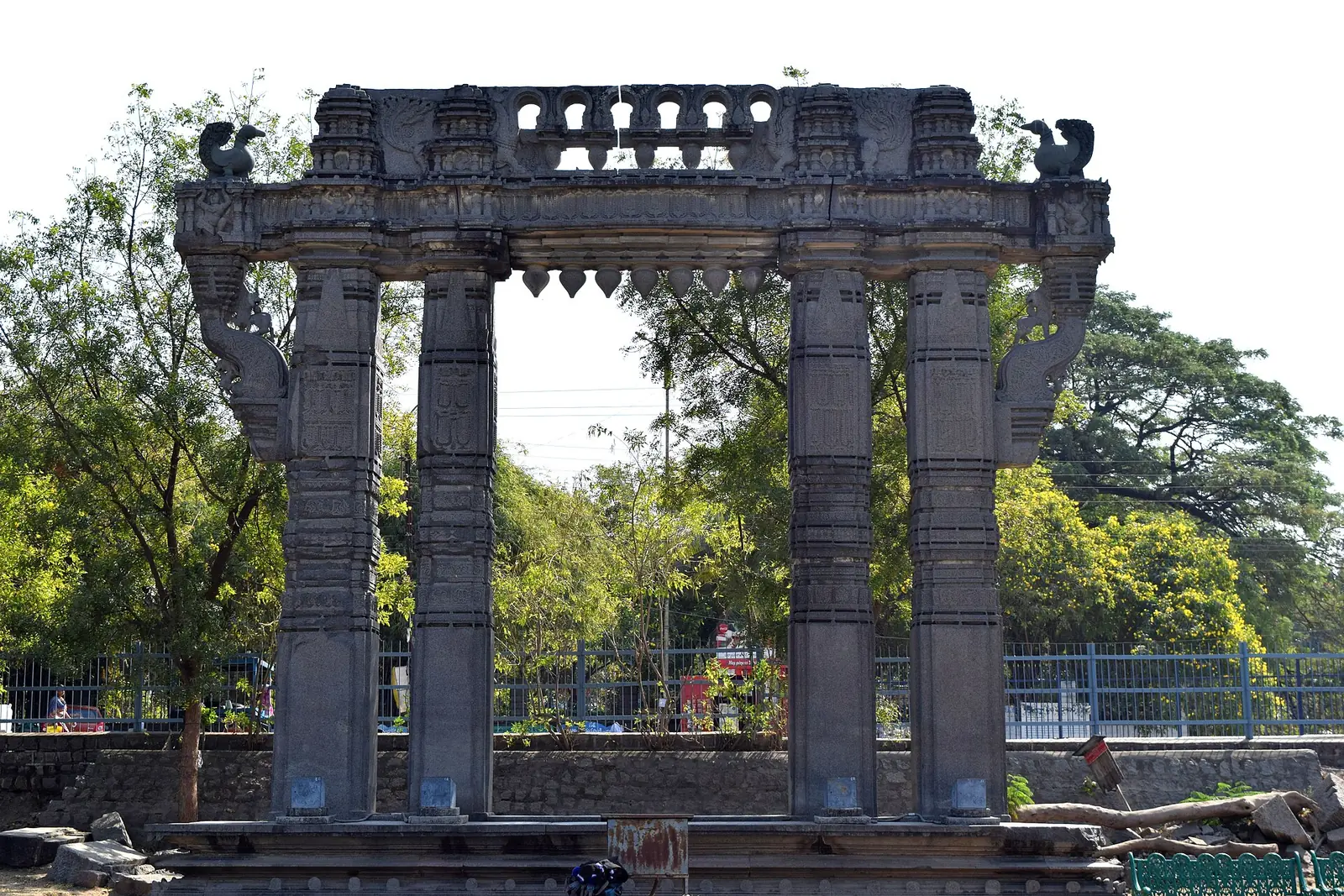
The Tughluq governor fled to Delhi and Warangal returned to Telugu rule.
01Seventy-five chiefs
Prolaya Nayaka first freed the coastal country and recorded his work in the Vilasa grant, which speaks of the suffering under the new rulers and of temples and agraharas restored. After him his cousin Kapaya Nayaka led the chiefs on Warangal. The Kaluvacheru grant of 1423 counts seventy-five Nayakas who joined the cause. Malik Maqbul, the Sultan’s governor, abandoned Warangal and fled north; later he served Firuz Shah Tughluq as wazir in Delhi.
02A wider rising
The Telugu rising came alongside the founding of Vijayanagara in 1336 and the Hoysala resistance further south. In the same decade Delhi’s hold over the south broke, and in 1347 the Bahmani kingdom split away from it as well. Kapaya Nayaka ruled from Warangal until the Bahmanis killed him, around 1368. The Reddi kings of Kondavidu, who had fought beside him, carried Telugu rule on along the coast.

The first successful Hindu rising against the Delhi Sultanate in the south, and the model for the Vijayanagara founders.