
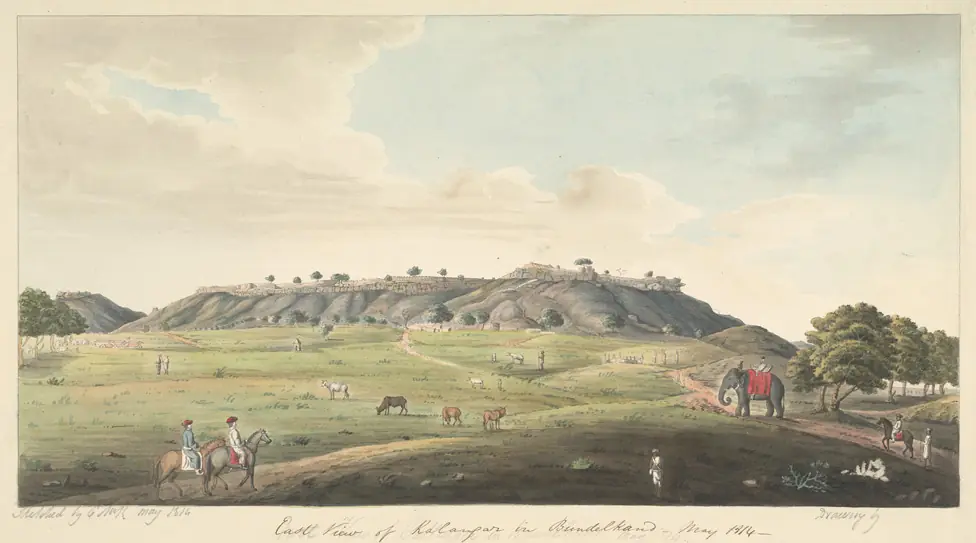
Neither fort was stormed; Gwalior and then Kalinjar bought peace with tribute, and Mahmud left Bundelkhand with the Chandela kingdom intact.
01The night of 1019
When Rajyapala, the Pratihara king of Kannauj, abandoned his city to Mahmud in 1018, Vidyadhara and his allies punished him; the Chandela feudatory Arjuna of the Kachchhapaghatas killed Rajyapala, a deed recorded in a Kachchhapaghata inscription at Dubkund. Mahmud took it as a challenge. In 1019 he marched against Vidyadhara, whom the Persian writers call Ganda, and found a vast Chandela army drawn up to meet him. The Muslim historians say the Sultan, seeing its size, regretted coming; then, in the night, the Chandela king withdrew, and Mahmud plundered his camp.
02Sieges and a settlement
Mahmud came back in late 1022. He first sat before Gwalior, held by Vidyadhara’s Kachchhapaghata ally, which after a few days paid tribute in elephants. He then besieged Kalinjar, the great Chandela fort on its flat-topped hill. Ibn al-Athir says the siege was long, and that Vidyadhara at last sent elephants and tribute and asked for peace. Mahmud granted it and marched home. The Chandela kingdom was not annexed; it went on to build the temples of Khajuraho and lasted until Kalinjar fell in 1202. Khajuraho’s Kandariya Mahadeva is usually dated to Vidyadhara’s reign.
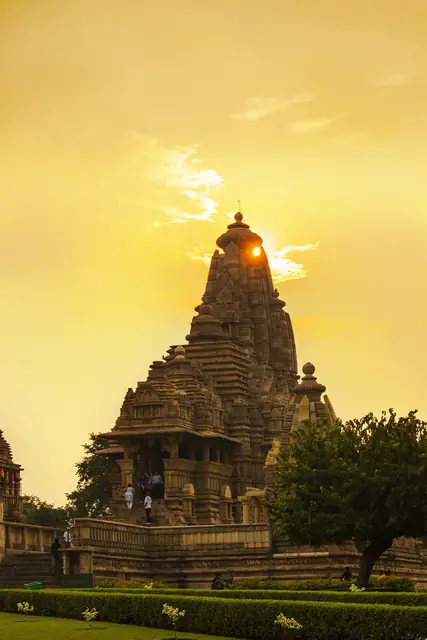
Bundelkhand was one of the few regions Mahmud entered and left without conquering, and the Chandela state came through his raids whole.