
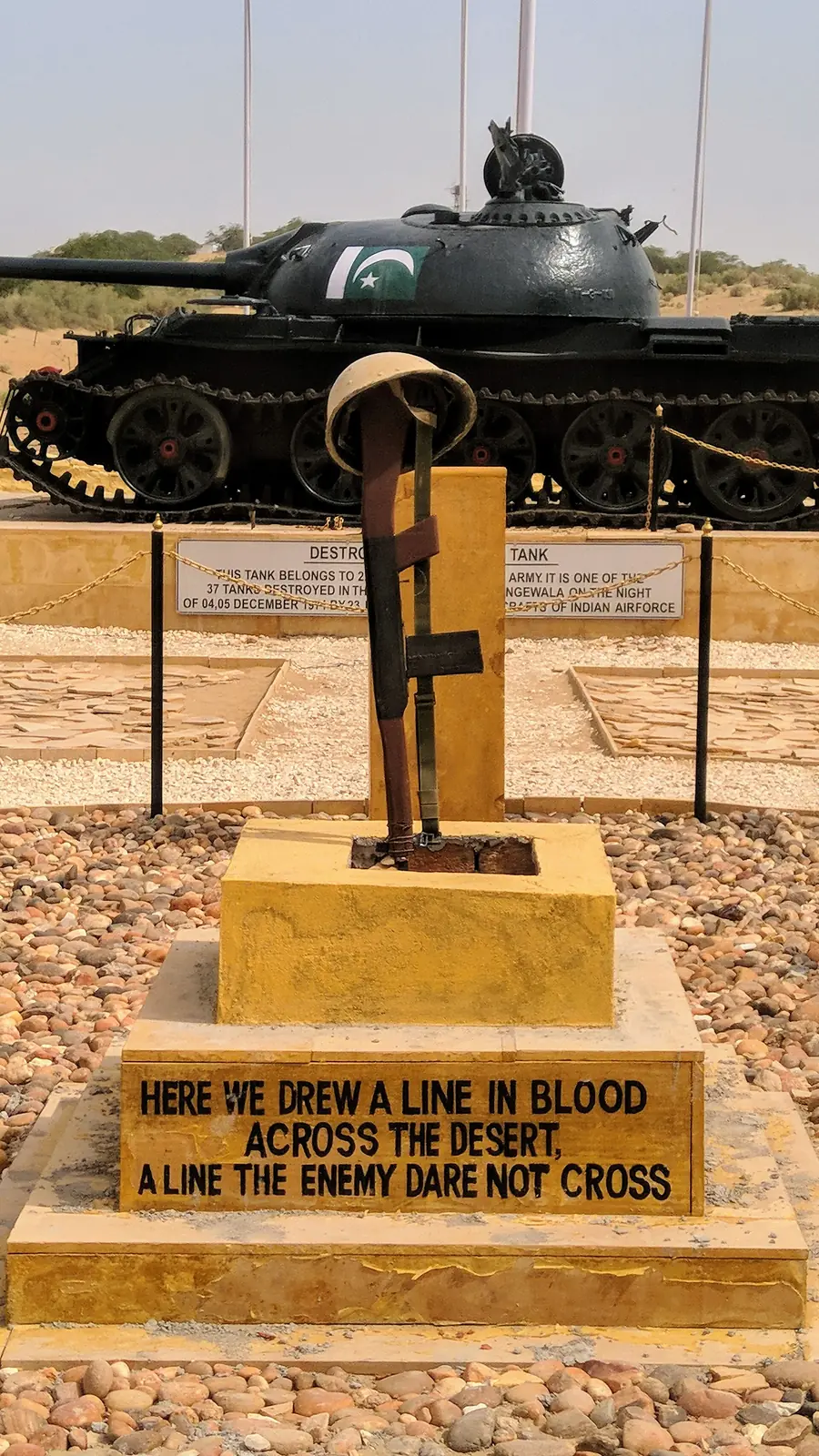
The post held through the night, and at first light IAF Hunters from Jaisalmer broke the Pakistani armoured column.
01The night of 4 December
War broke out on 3 December 1971. That night Pakistan sent a brigade with a regiment of tanks across the border in the Thar, meaning to take Longewala, Ramgarh and then Jaisalmer. Major Kuldip Singh Chandpuri’s company, with a jeep-mounted recoilless gun and mortars, saw the column coming around midnight. He chose to stay. The tanks, slowed by sand and by a barbed-wire fence that the attackers took for a minefield, came under fire from the post; several were destroyed. The attackers waited for daylight.
02The Hunters at dawn
At first light on 5 December Hawker Hunters of the Indian Air Force from Jaisalmer arrived over the open desert, where the tanks had no cover and no air protection. Through the day they struck again and again, and the Pakistani brigade fell back leaving dozens of tanks and vehicles burnt out on the sand. Major Chandpuri was awarded the Maha Vir Chakra. Eleven days later, on 16 December 1971, the Pakistani army in the east surrendered at Dhaka, and Bangladesh was born.
Longewala stopped Pakistan’s one serious thrust in the western desert in 1971 and became the Indian Army’s best-known stand of that war.