
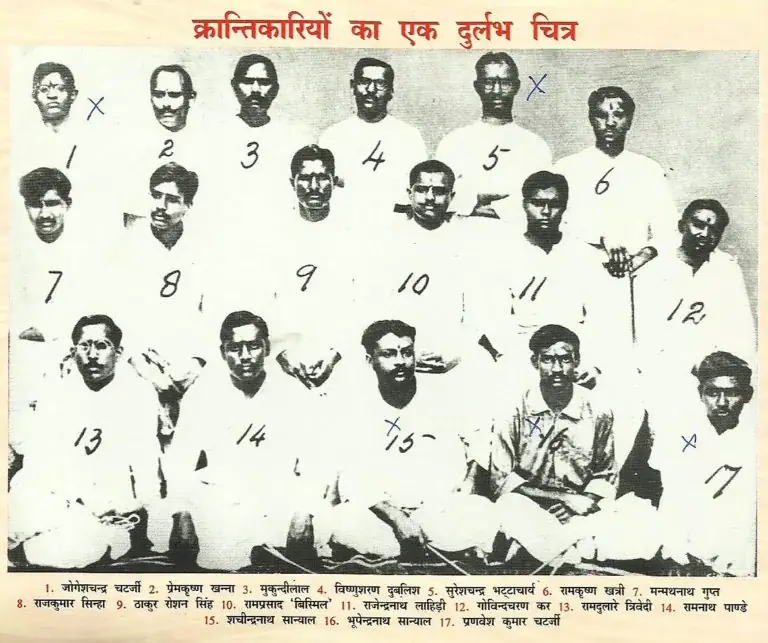
The revolutionaries took the government cash from the train, but the police later arrested most of the group; four were hanged in December 1927.
01The Number 8 Down
The Hindustan Republican Association needed money for arms. On the evening of 9 August 1925 its members boarded the Number 8 Down train from Saharanpur to Lucknow, pulled the chain near Kakori, held the guard and broke open the iron chest of railway cash with hammers. They had agreed to touch no passenger’s money. A passenger who stepped down was killed by a stray shot. Within minutes the group had gone into the dark with the money.
02The Kakori trial
A police sweep across northern India arrested some forty men. After a long trial Ram Prasad Bismil, Ashfaqulla Khan, Rajendra Lahiri and Roshan Singh were sentenced to death. Lahiri was hanged at Gonda on 17 December 1927, and Bismil at Gorakhpur, Ashfaqulla at Faizabad and Roshan Singh at Allahabad on 19 December. Bismil, an Arya Samaji, and Ashfaqulla, a devout Muslim, were close friends, and their friendship became a symbol of the freedom struggle. Chandrashekhar Azad was never caught and rebuilt the movement as the Hindustan Socialist Republican Association with Bhagat Singh.
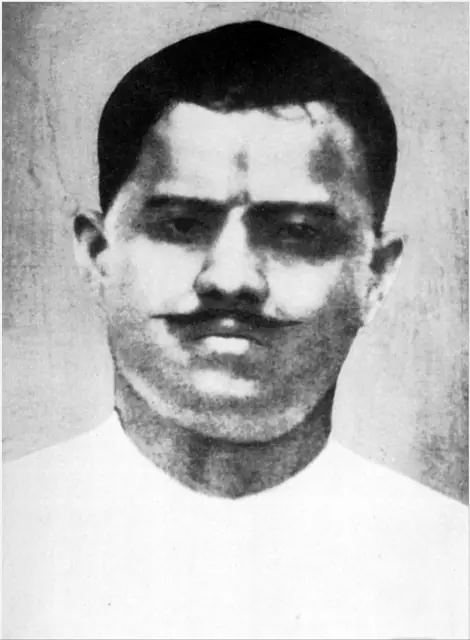
Kakori and its martyrs inspired the next generation of revolutionaries, from Bhagat Singh to Azad, and Bismil’s songs became anthems of the struggle.