
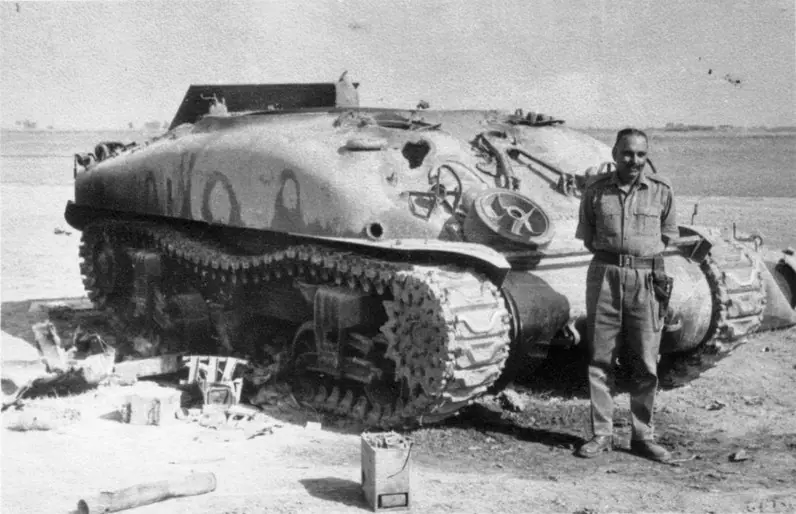
Pakistan’s plan to seize Kashmir failed; a UN ceasefire on 23 September was followed by the Tashkent Declaration, returning both sides to their pre-war lines.
01Gibraltar to Lahore
In August 1965 Pakistan sent thousands of armed infiltrators into Kashmir under Operation Gibraltar, hoping for a local rising that never came. Indian troops crossed the ceasefire line and took the Haji Pir pass on 28 August. On 1 September Pakistan launched Operation Grand Slam with tanks in the Chhamb sector, aiming at Akhnoor and the road to Jammu. On 6 September India crossed the international border towards Lahore and Sialkot, drawing Pakistan’s armour away.
02Asal Uttar and Tashkent
Between 8 and 10 September Pakistan’s 1st Armoured Division drove into Indian Punjab near Khem Karan. The 4th Mountain Division let it into flooded sugarcane fields around Asal Uttar and destroyed it; scores of Patton tanks were knocked out or abandoned. Company Quartermaster Havildar Abdul Hamid of 4 Grenadiers, firing a jeep-mounted recoilless gun, destroyed several tanks before he was killed and was awarded the Param Vir Chakra. In the Sialkot sector came the great tank battles of Phillora and Chawinda. The ceasefire came on 23 September. At Tashkent on 10 January 1966 Shastri and Ayub signed the declaration; Shastri died there that night.
The war ended Pakistan’s hope of taking Kashmir by force, and Shastri’s call ‘Jai Jawan, Jai Kisan’ came out of it.