
Nahapana’s line was ended and the western Deccan returned to the Satavahanas.
01The queen mother’s inscription
In Cave 3 of the Pandavleni caves above Nashik, Gautami Balashri recorded her son’s deeds in the nineteenth year of her grandson Pulumavi. She calls him the destroyer of Shakas, Yavanas and Pahlavas, the one who rooted out the Khakharata line and restored the glory of the Satavahana family. Nahapana had ruled the coast and the Nashik–Pune country, and his son-in-law Ushavadata had made grants in these very caves.
02The overstruck coins
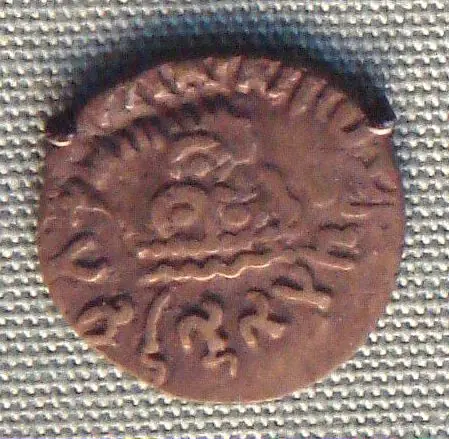
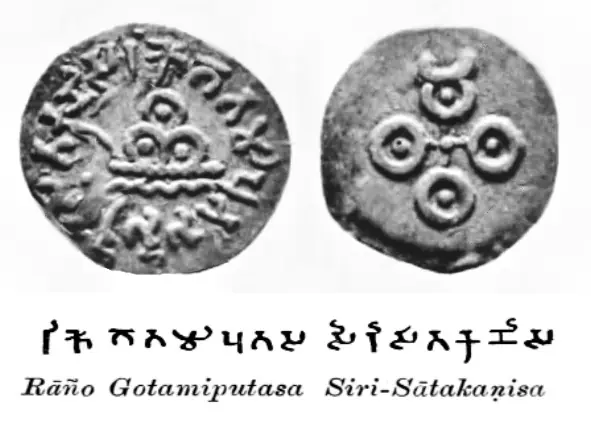
In 1906 a hoard of about thirteen thousand silver coins was found at Jogaltembhi near Nashik. Most were Nahapana’s, and thousands had been re-struck with Gautamiputra’s name and the Satavahana symbols of the hill and the Ujjain mark. A conqueror stamping his name over his enemy’s money is about as plain as evidence gets. The Kshatrapas of Ujjain under Rudradaman later took back some of this ground from Gautamiputra’s successors.
It ended Shaka rule in the western Deccan for a generation and made the Satavahanas the leading power of the south.