
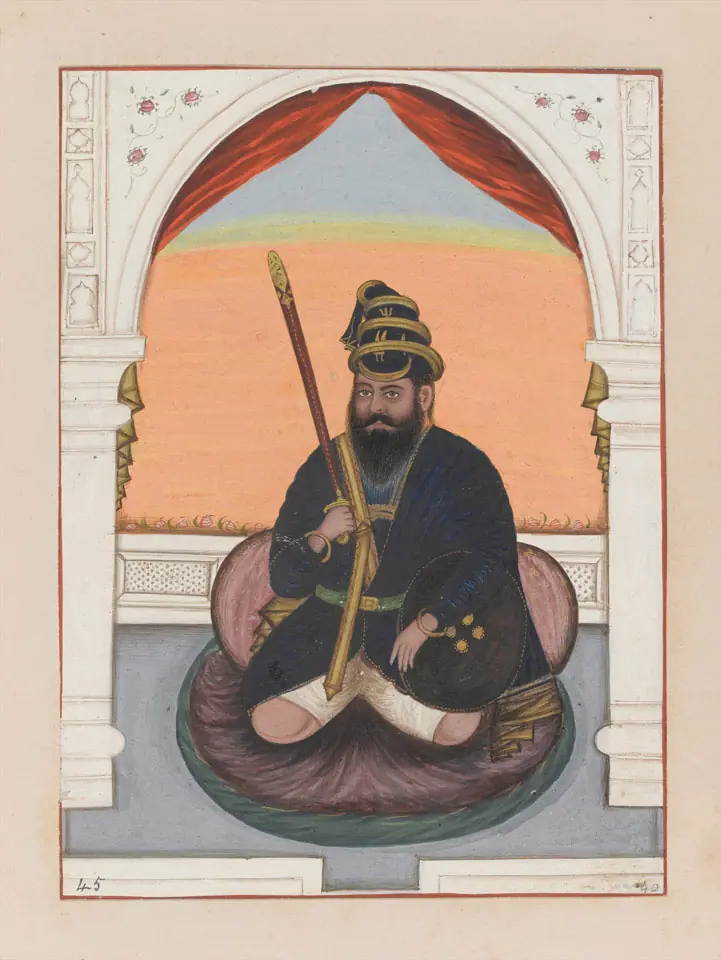
The tribal army on the hill was destroyed and Azim Khan withdrew to Kabul; Akali Phula Singh fell in the charge.
01The road to Peshawar
After taking Attock in 1813, Multan in 1818 and Kashmir in 1819, Maharaja Ranjit Singh pressed on the Afghan lands west of the Indus. Peshawar was held by the Barakzai brothers, and in early 1823 their chief, Muhammad Azim Khan, the Afghan wazir, came down from Kabul to stop the Sikhs. He called on the Yusufzai and Khattak tribes to fight a holy war, and some thousands of them took post on the hill of Tibba Tehri on the north bank of the Kabul river, near Nowshera. Azim Khan’s own army lay across the river.
02Phula Singh’s charge
On 14 March 1823 the Sikh army attacked the hill. Akali Phula Singh, the fierce Nihang leader who had once publicly called the Maharaja to account at the Akal Takht, led his men up the slope, mounting an elephant when his horse was hit, and was shot dead near the top. The tribesmen fought hard and charged down again and again, and the fight lasted till evening, when Ranjit Singh threw in his reserve and guns and cleared the hill. Sohan Lal Suri, the court chronicler, records heavy losses on both sides. Azim Khan, unable to cross the swollen river, retreated and died soon after.
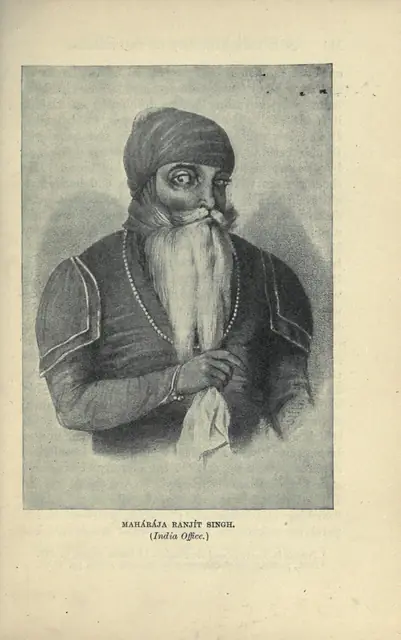
Nowshera made Peshawar tributary to the Sikh kingdom and carried Ranjit Singh’s frontier to the Khyber; Phula Singh’s samadhi still stands near the field.