
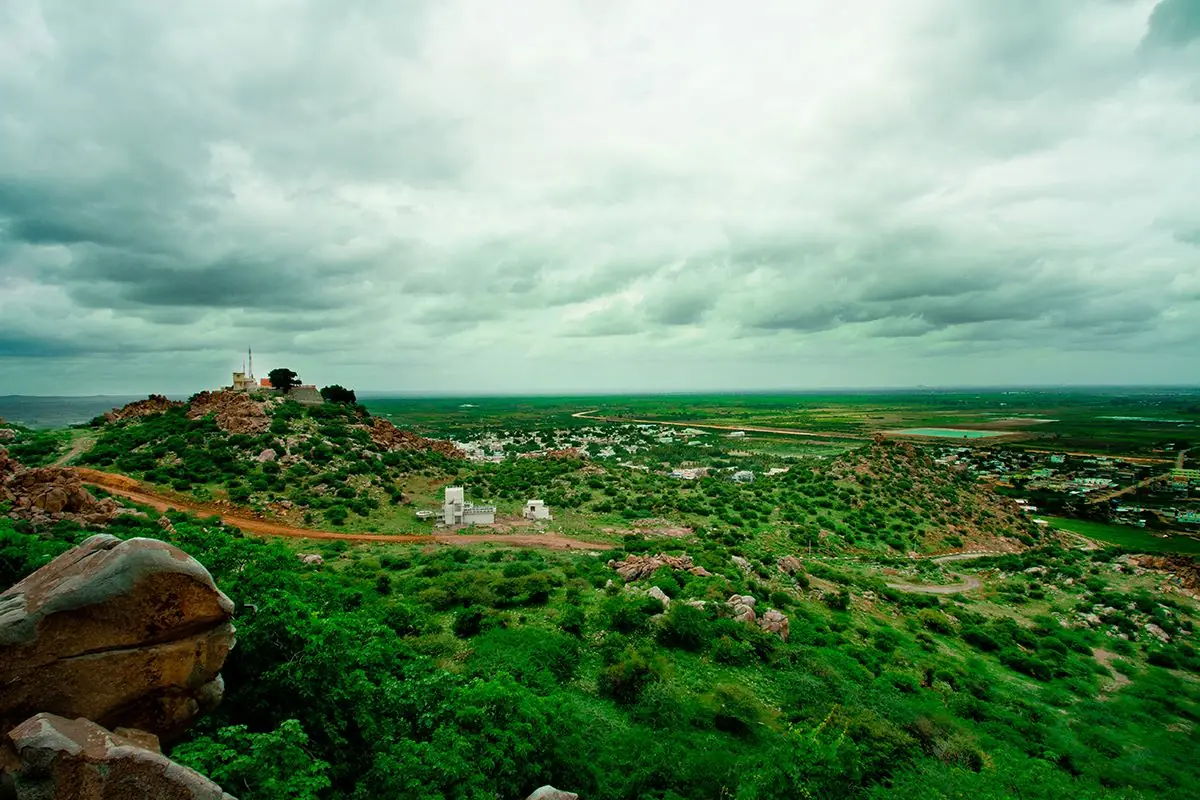
Chola records claim Jayasimha fled the field at Muyangi; the Chalukyas kept their lands north of the Tungabhadra, which became the frontier.
01Muyangi in the meykkirti
Chola kings opened their inscriptions with a meykkirti, a poem in Tamil listing their deeds year by year. Rajendra’s, recited on temple walls across the empire, says that at Muyangi Jayasimha, filled with fear, turned his back and hid himself, and that Rajendra took the seven and a half lakh country of Rattapadi. Muyangi is Maski, a town in the doab between the Krishna and the Tungabhadra, already old when Ashoka had an edict cut on its hill. The Chalukyas had been raiding the Chola feudatories in Vengi, and Rajendra struck at them directly.
02Two claims, one frontier
Jayasimha’s own records tell a different story. An inscription of 1019 from Belagami praises him for routing the Cholas and other enemies. Neither side gives numbers. What the map shows is that the Chalukyas held Kalyani and the doab north of the Tungabhadra, while the Cholas held Gangavadi and pressed on Vengi. The river became the line over which the next four Chola kings fought the Chalukyas, at Koppam, at Kudal-Sangamam and at Kalyani itself.
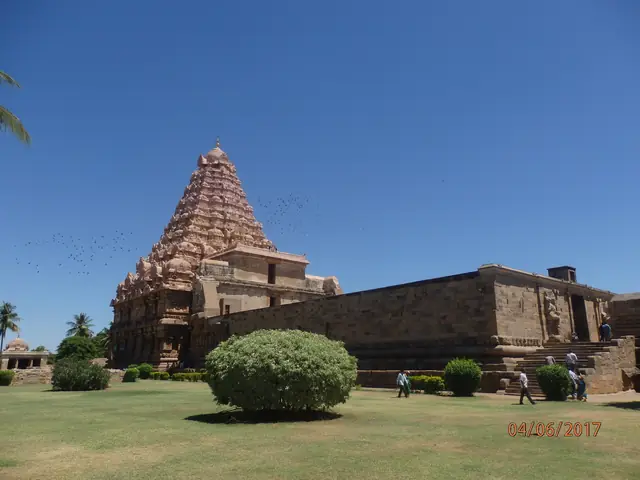
Maski opened half a century of Chola–Chalukya war over the Raichur doab, the same ground Vijayanagara and the Bahmanis would contest three centuries later.