
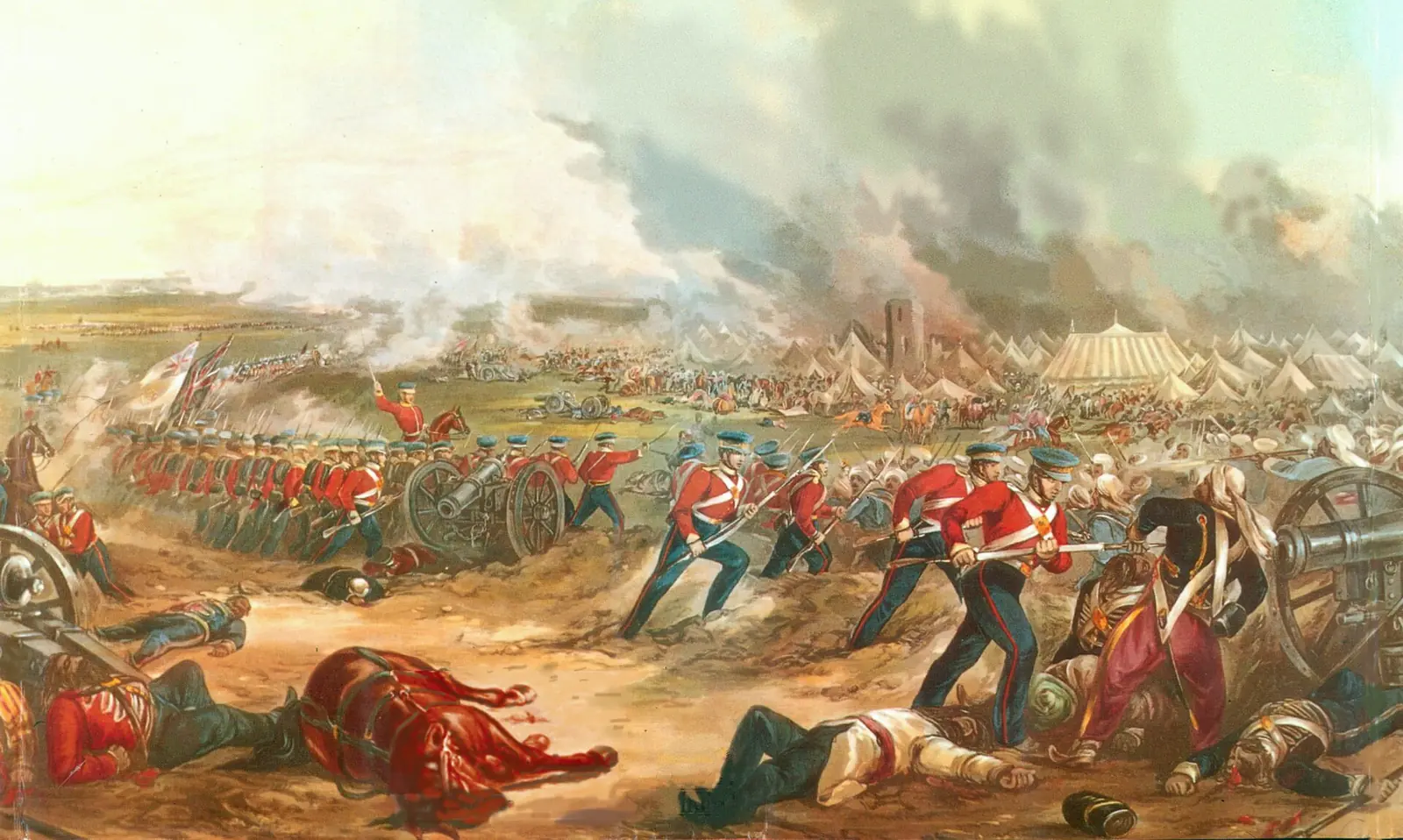
The Company took the entrenched camp after a night on the edge of defeat; Tej Singh’s fresh army came up and then withdrew without pressing home.
01Into the guns
Lal Singh’s army had dug in at Ferozeshah with about a hundred guns. On the afternoon of 21 December 1845 Gough, joined by the Firozpur division, attacked with the short winter day nearly gone. The Sikh guns tore the attacking lines apart; regiments reached the trenches and were driven out again; a magazine blew up inside the camp. By nightfall the Company held part of the position, but its army was mixed up and exhausted, lying among the dead in bitter cold while Sikh guns fired into it. Hardinge, the Governor-General, who was serving under Gough, sent his papers back and prepared for the worst.
02Tej Singh turns back
At dawn on 22 December the Company troops attacked again and found that Lal Singh had left; the camp and its guns were taken. Then Tej Singh came up from Firozpur with a fresh army and many guns, facing British soldiers who were almost out of ammunition. After a cannonade he drew off his troops and recrossed towards the Sutlej. Cunningham, who served in the campaign, wrote that both Sikh commanders were in touch with the British and wished the Khalsa to be beaten. The Company lost about 2,400 killed and wounded at Ferozeshah, among the heaviest losses it ever suffered in a single battle in India.
Ferozeshah is remembered as the battle the Khalsa won on the field and lost by betrayal; after Aliwal and Sobraon the Lahore kingdom became a Company protectorate.