
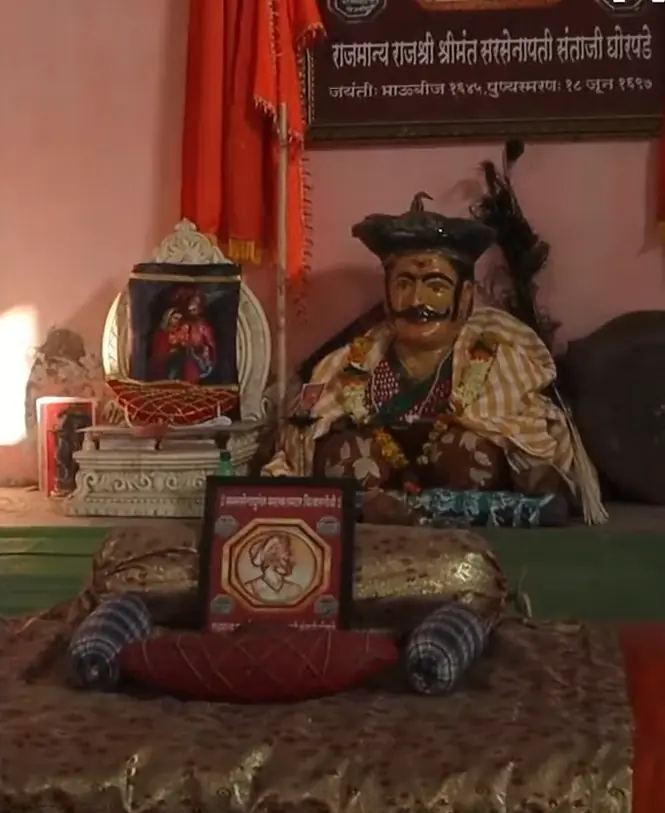
The Mughal army was surrounded in the mud fort of Dodderi; Qasim Khan died there and the rest surrendered and paid a ransom.
01The war after Sambhaji
After Chhatrapati Sambhaji was executed in 1689, his brother Rajaram escaped to Jinji in the far south, and the Maratha war passed to roving cavalry commanders. The greatest of them were Santaji Ghorpade and Dhanaji Jadhav. Santaji moved fast, struck where he was not expected, and lived off the country. In 1695 he swept into the Karnatak plateau, where Qasim Khan, the Mughal commander at Sira, was moving with a large force and a convoy, joined by Khanazad Khan with troops sent from the imperial camp.
02Penned in at Dodderi
Santaji fell on the Mughal camp at dawn, took the baggage and cut the army off from its supplies. The Mughals took shelter in the mud fort of Dodderi, which had almost no food. Santaji’s horsemen ringed the place. Jadunath Sarkar, from the Mughal histories, describes men eating their horses and dying of hunger. Qasim Khan died inside, by the Persian accounts of an overdose of opium. Khanazad Khan surrendered, paid a heavy ransom and gave up the army’s horses and elephants. A few weeks later, in January 1696, Santaji destroyed the relief force of Himmat Khan at Basavapatna, where Himmat Khan was killed.
Dodderi proved that the Marathas, without a capital or a king in Maharashtra, could still destroy imperial armies in the field, and it made Santaji’s name feared in every Mughal camp.