
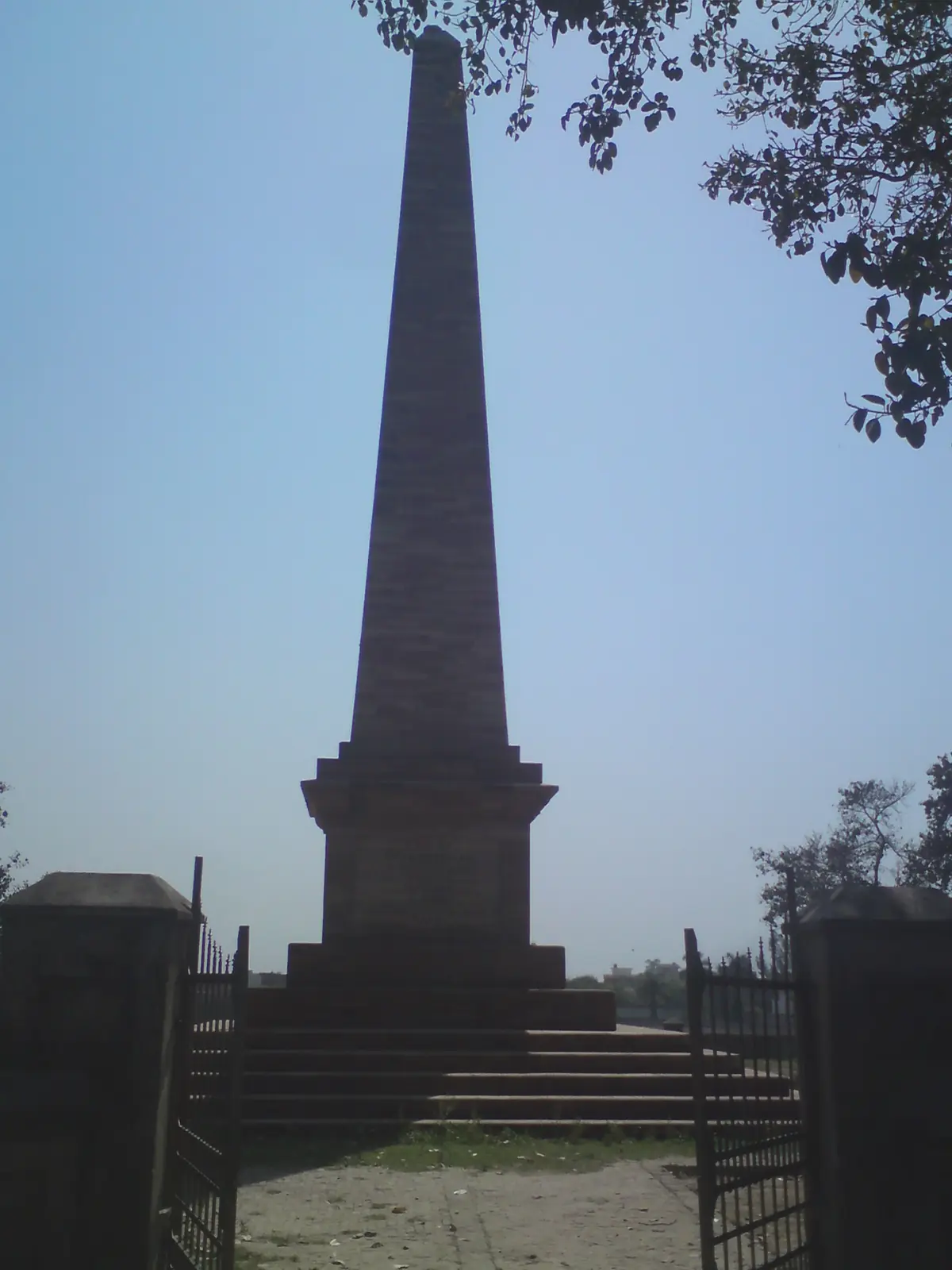
Both sides held part of the field at nightfall; the Company lost more men than in any battle of the Punjab wars, and Gough was ordered to be replaced.
01An attack late in the day
In the Second Anglo-Sikh War Sher Singh Attariwala drew up the Khalsa in thick scrub jungle near Chillianwala, backed by the Jhelum. Gough had meant to wait for the next day, but when Sikh guns opened on his camp in the afternoon he attacked at once. The Company brigades went forward blind through the thorn. On the left the 24th Foot reached the Sikh guns and was shot to pieces, losing over half its strength; on the right a cavalry brigade broke in confusion and rode back through its own guns. Some British colours and guns were lost.
02A drawn field, then Gujrat
By dark the Sikhs had fallen back to their entrenched lines and the Company held the ground in front, with more than two thousand of its men killed, wounded or missing. Both sides fired salutes for victory. In London the news caused an uproar, and Sir Charles Napier was sent out to replace Gough. Before he arrived, Gough won the decisive battle of Gujrat on 21 February 1849 with his artillery, and on 29 March the Punjab was annexed.
Chillianwala was the Khalsa’s finest stand of the Anglo-Sikh wars and showed how hard the last independent Indian army fought before the Punjab fell.