01One less than a crore
Una-koti means one less than a crore. The katha told in Tripura: Bhagwan Shiva was travelling to Kashi with a crore of devas and halted here for the night, telling them all to rise before dawn. Only Shiva woke. He went on alone, and the sleepers were turned to stone, so that one crore less one images remain. Another telling names a sculptor, Kallu Kumhar, who hoped to follow Shiva and Parvati to Kailash if he carved a crore of images in a night, and fell one short.
02The carvings
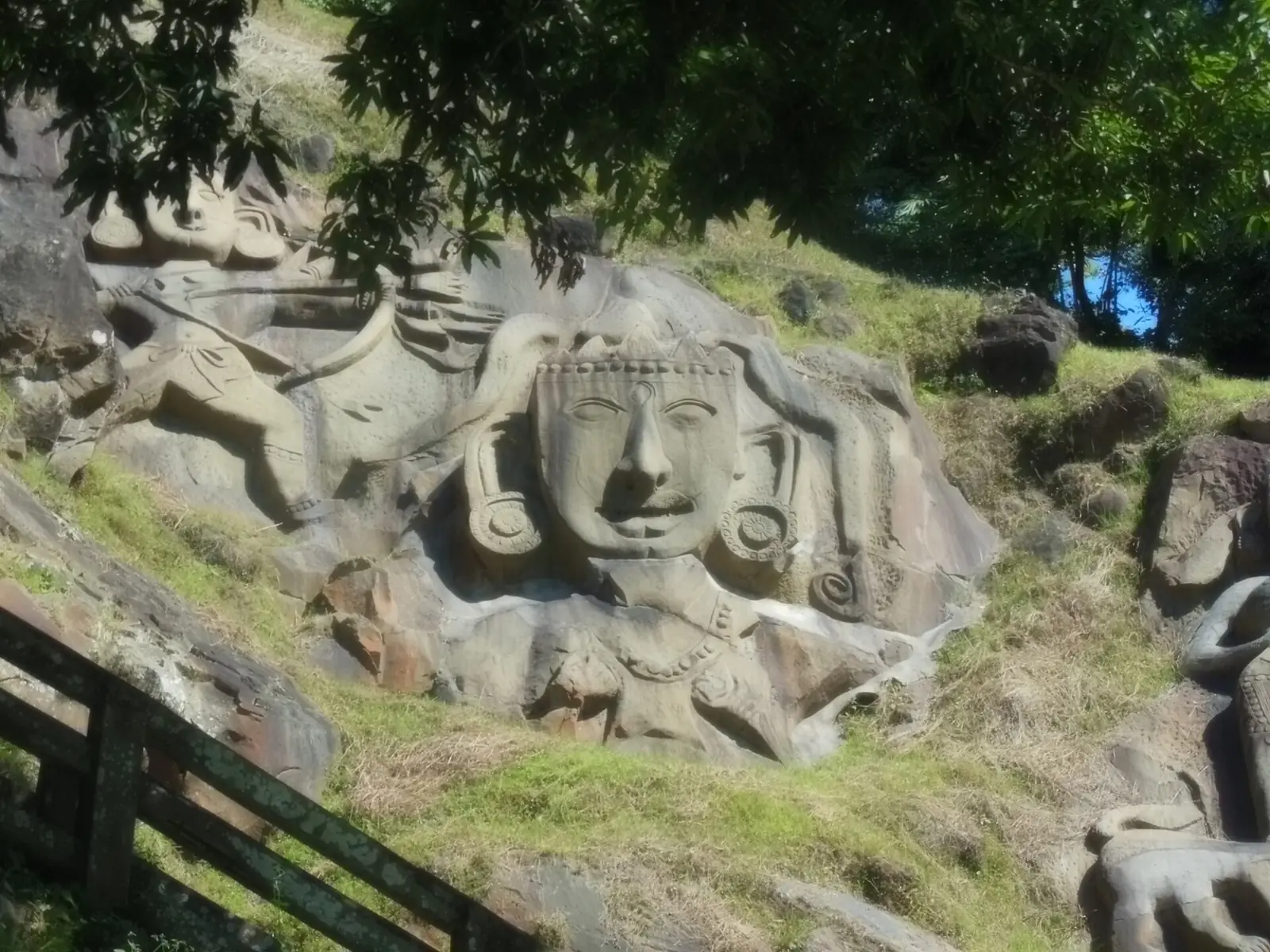
The central relief is Unakotishvara Kala Bhairava, a Shiva head with a carved headdress, flanked by Durga on a lion and Ganga on her makara. Nearby stand three great Ganesh figures, Nandi half-buried, and many smaller heads along the stream. They are usually dated between the 7th and 9th centuries. The Archaeological Survey of India protects the site. The Ashokashtami mela in March–April brings thousands of pilgrims who bathe in the stream before darshan.
The life of this place
- c. 7th–9th centuryRock reliefs of Shiva, Ganesh and the Devi carved on the hillside.
8 km from Kailashahar in Unakoti district, about 180 km north-east of Agartala; dry months are best for the slippery steps.