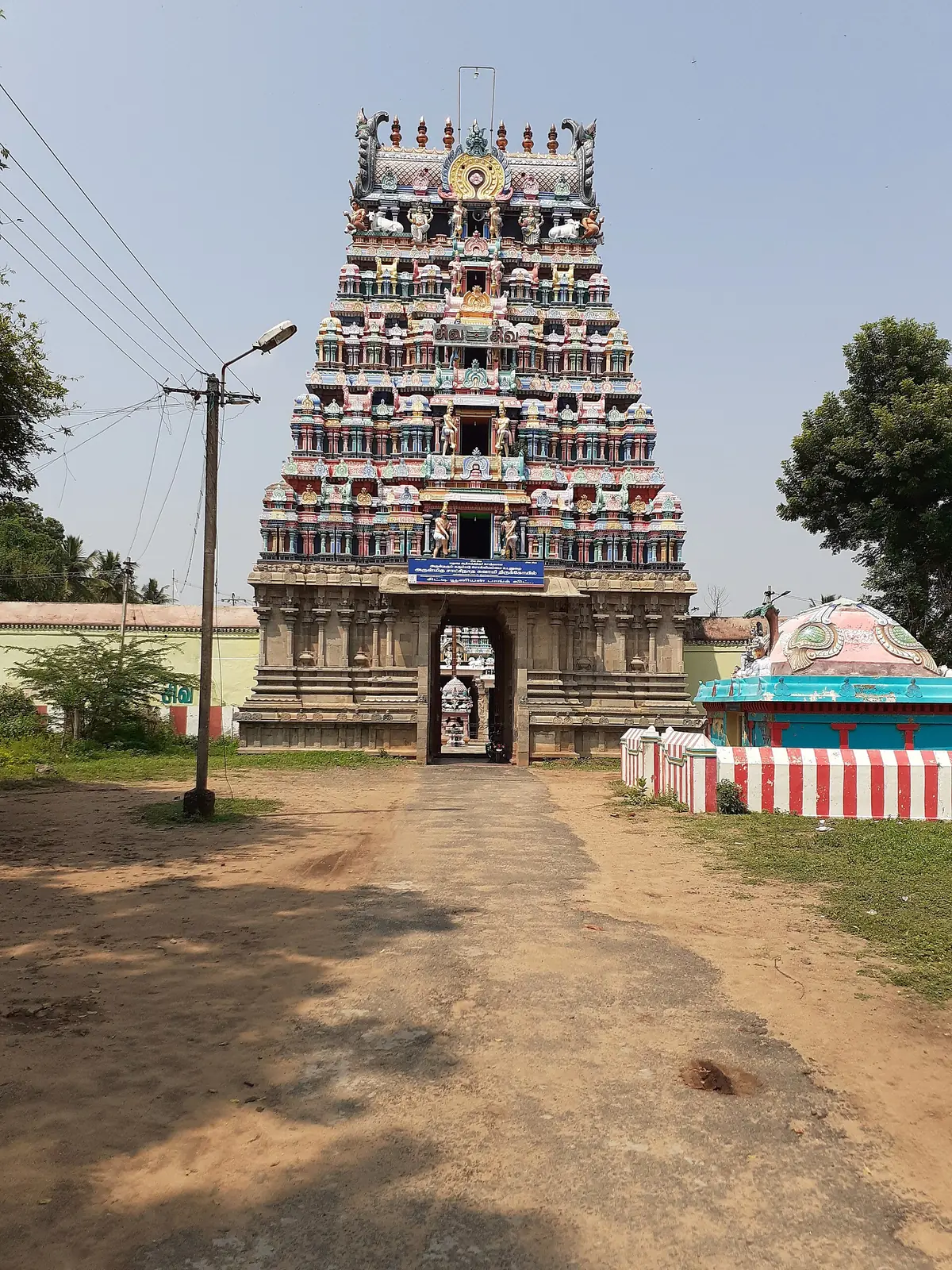
01The witness
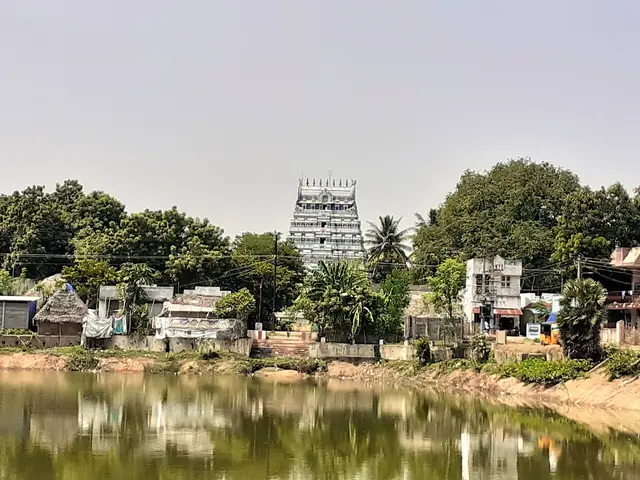
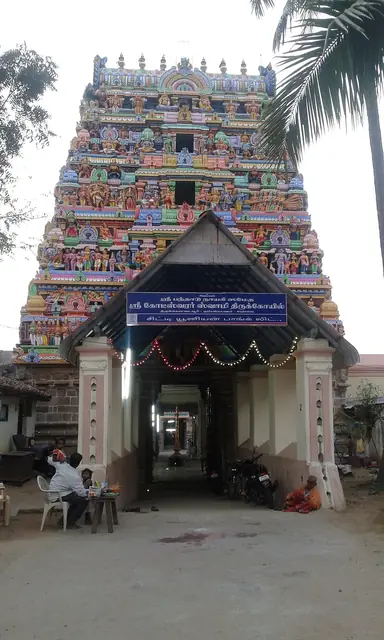
The Tiruvilaiyadal Puranam tells of a merchant’s daughter of Madurai who married her betrothed at Tiruppurambiyam, with no one present but the temple’s linga, a vanni tree and a well. When the groom died of snakebite and the marriage was later denied at Madurai, she cried that the Lord of Tiruppurambiyam had seen it. Shiva brought the linga, the tree and the well to Madurai to bear witness. So the Lord here is Sakshinathar, the witness. The temple’s Vinayaka, Pralayam Katha Vinayagar, who saved the place from the deluge, is held to be made of sea foam and shells; he receives abhishekam only once a year, on Vinayaka Chaturthi, with honey, which devotees say the image absorbs.
02The battle of Tiruppurambiyam
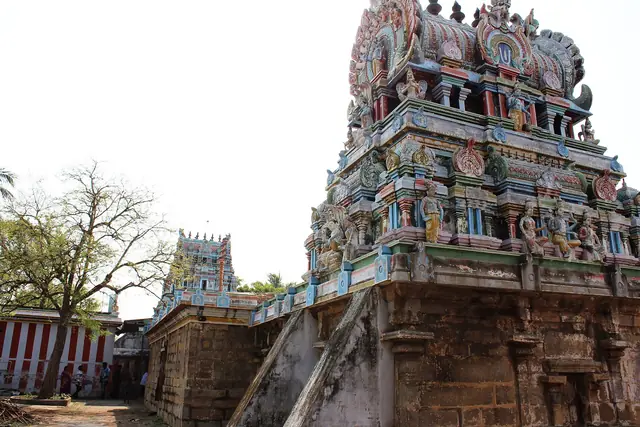
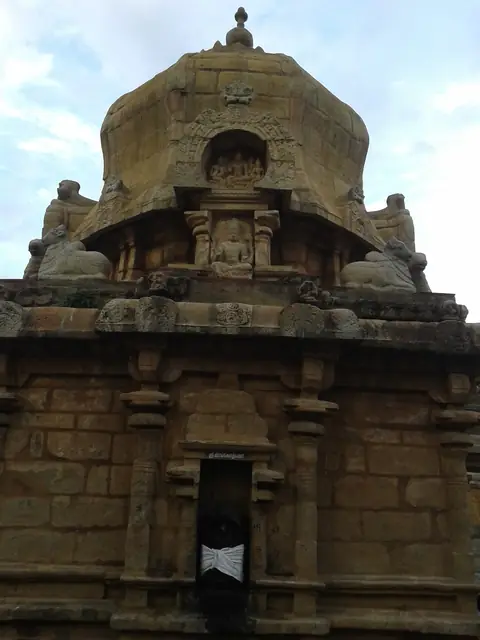
Around 885 CE the Pallava king Aparajita, with his ally the Ganga king Prithvipati I and the young Chola Aditya, met the Pandya Varaguna II on this ground and defeated him. Prithvipati fell in the battle. The victory broke Pandya power in the Kaveri country and let the Cholas rise; within a few years Aditya had overthrown Aparajita himself. The Cholas remembered the field with honour, and Aditya rebuilt this temple. The Devi’s shrine is the work of Rajaraja I. The temple was sung in the Tevaram, and is cared for today by the Madurai Adheenam.
The life of this place
- c. 885 CEBattle of Tiruppurambiyam: Aparajita Pallava and his allies defeat Varaguna II Pandya.
About 7 km north-west of Kumbakonam. Vinayaka Chaturthi night is the time of the honey abhishekam.