01Neelan becomes the Alvar
Thirumangai Alvar was born Neelan, a chieftain of these parts. He wished to marry Kumudavalli, raised at Thiruvali, and she agreed on one condition: that he feed a thousand devotees of Vishnu every day. He did, and when his wealth ran out he took to robbing travellers to keep the feeding going. One night he waylaid a bridal couple near Thirumanankollai, and could not lift a toe-ring from the groom’s foot. The groom was Vishnu, the bride Lakshmi; the Lord spoke the Ashtakshara, Om Namo Narayanaya, into his ear, and the robber became the Alvar. At Thiruvali, ali means embrace: Lakshmi sat on Narasimha’s lap to calm him after Hiranyakashipu’s death, here on his right side, not the usual left.
02The Alvar’s own temple
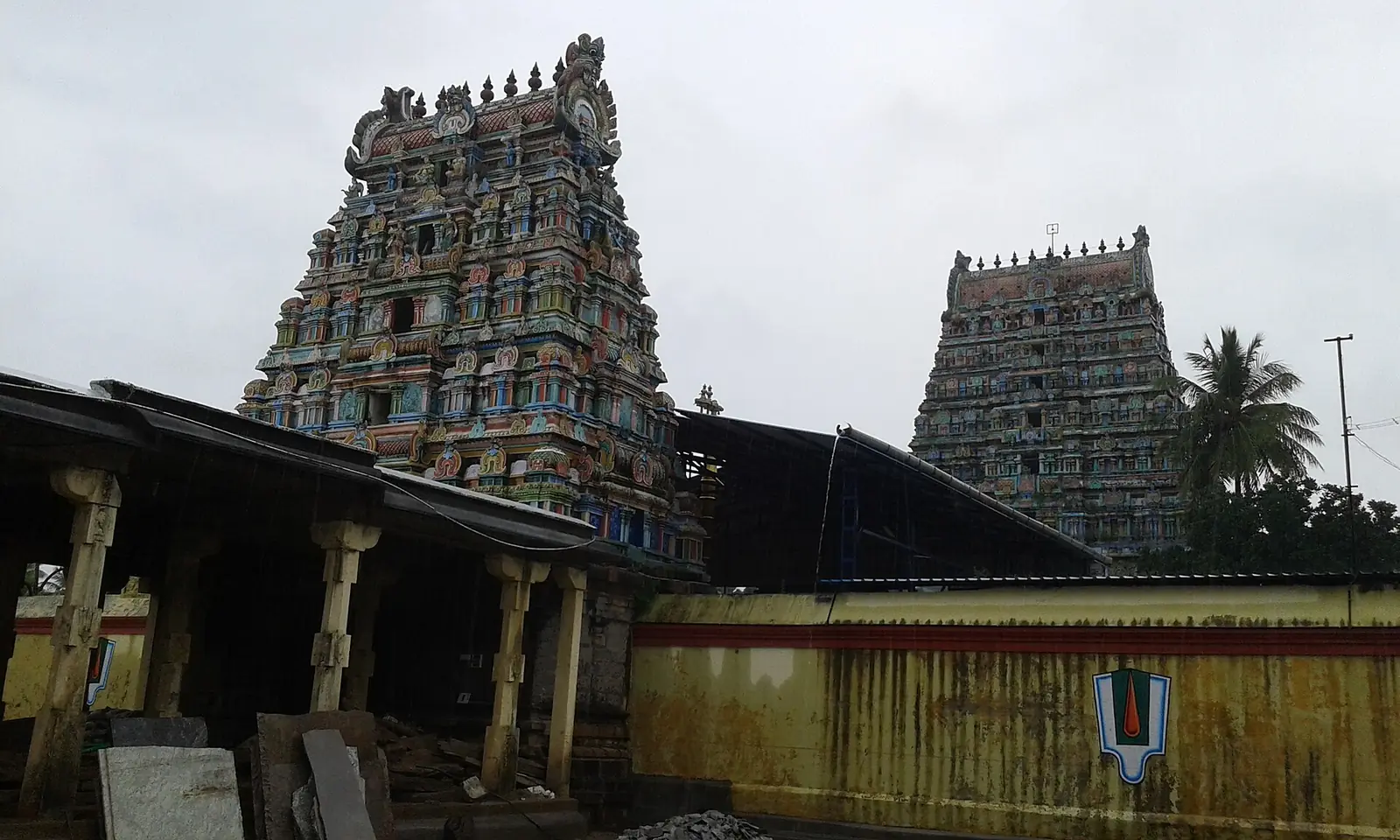
Thirumangai Alvar sings of Thiruvali and Thirunagari as one, in more than forty pasurams. Thirunagari, his birthplace, has a seven-tiered gopuram of about 38 m and covers some two acres; Vedarajan sits on a raised sanctum under an ashtanga vimana with stucco avatars. The Alvar’s north-facing shrine shares the raised enclosure, has its own flag post, and holds the Chindanaikiniyan image he is said to have worshipped. Thiruvali’s Azhagiya Singar temple is smaller, about half an acre, with the Alvar’s shrine outside its walls. The Vijayanagara and Thanjavur Nayaka kings added pillared halls in the sixteenth century. On Thai Amavasai the Alvar’s image leaves Thirunagari for the Garuda Sevai at Thirunangur.
The life of this place
- Alvar periodThirumangai Alvar, born at Thirunagari, sings of the paired temples in over forty pasurams.
- 16th centuryVijayanagara and Thanjavur Nayaka kings add pillared halls and shrines.
About 10 km south-east of Sirkazhi; Thiruvali and Thirunagari are 5 km apart. The Vedupari utsavam, which re-enacts the Alvar’s meeting with the Lord, is the high point of Thirunagari’s festival year.