01The sea belongs to no one
Between 1845 and 1917 nearly 1,44,000 Indians came to Trinidad under indenture, most from the Bhojpuri districts of the Gangetic plain, to cut cane. Sewdass Sadhu was one of them, born in 1901 in what is now Uttar Pradesh. He built a small shivala for his worship facing the sea on land of the Waterloo sugar estate. The estate ordered it removed; he refused, was jailed for fourteen days and fined, and the shrine was torn down. If the land was the estate’s, he reasoned, the sea was not. He began carrying stones, sand and cement to the shore on his bicycle and building out into the water.
02Rebuilt for the anniversary
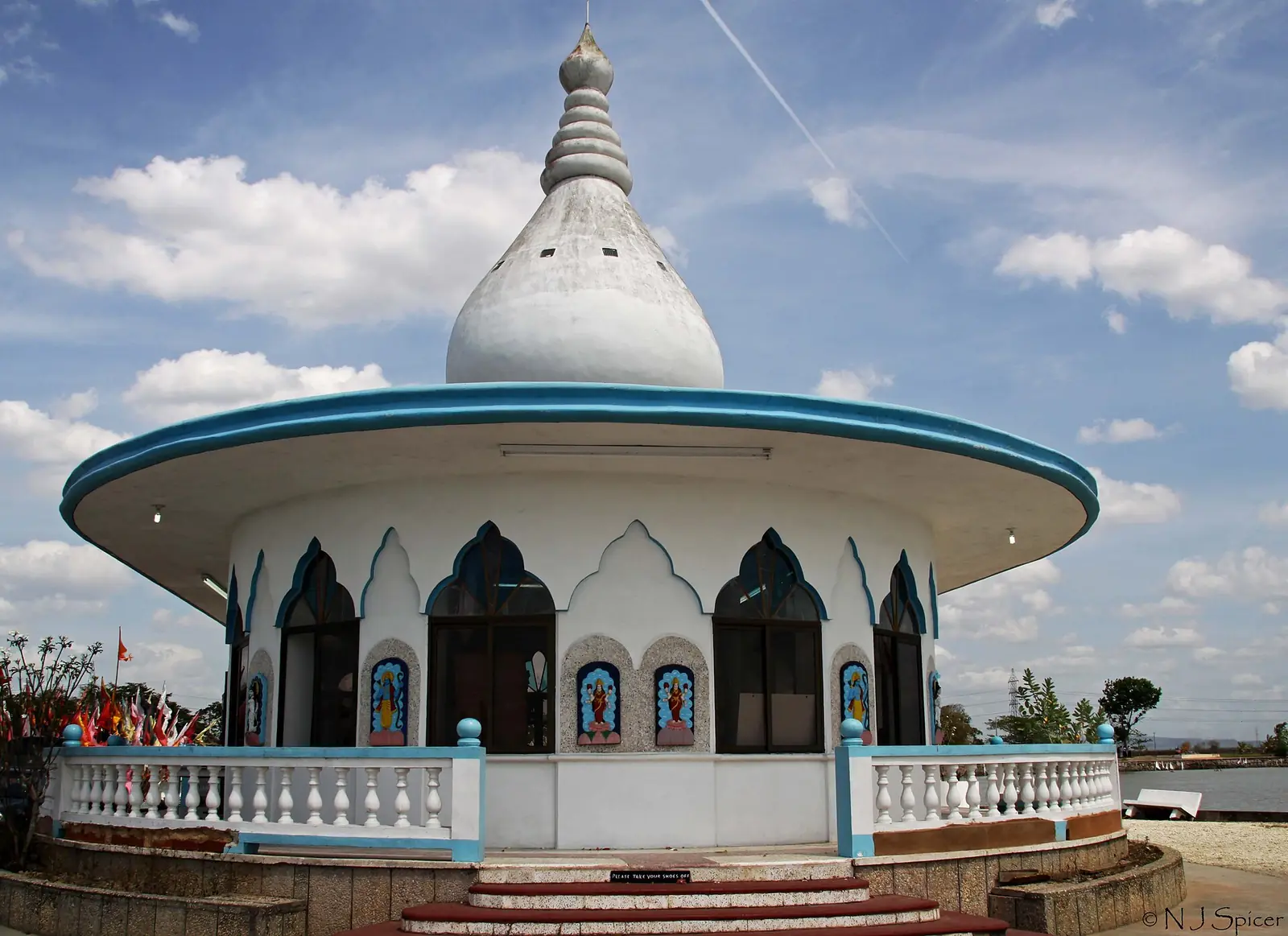
By 1952 a causeway and a small temple stood out in the gulf, and Sewdass Sadhu kept tending and extending it until he died in 1970. Tides and neglect wore it down. For the 150th anniversary of Indian Arrival in Trinidad, in 1995, the government rebuilt it as the present white octagonal temple with a long causeway, and it reopened that year. Families now come at dawn and at Shivaratri, and on the beach beside it Hindus of central Trinidad perform the last rites and scatter ashes into the sea.
The life of this place
- 1845The first indentured Indians reach Trinidad on the Fatel Razack.
- 1952Sewdass Sadhu’s causeway and temple in the sea are complete.
- 1970Sewdass Sadhu dies.
- 1995The rebuilt temple opens for the 150th anniversary of Indian Arrival.
Waterloo, south of Carapichaima on the west coast of central Trinidad. A statue of Sewdass Sadhu stands at the head of the causeway.