01Kalhana’s city
Kalhana’s Rajatarangini, Book IV, describes what Lalitaditya raised here after his campaigns: a silver image of Vishnu as Parihasakeshava, a golden Muktakeshava, a Mahavaraha and a Govardhanadhara, a great column bearing Garuda, and a Rajavihara with a huge copper image of the Buddha. His Tokharian minister Chankuna built a stupa and vihara, and other ministers and queens added shrines of their own. Parihasa means laughter or jest, and the name is the king’s. For a time it was his residence, rivalling Srinagar.
02Stripped and fallen
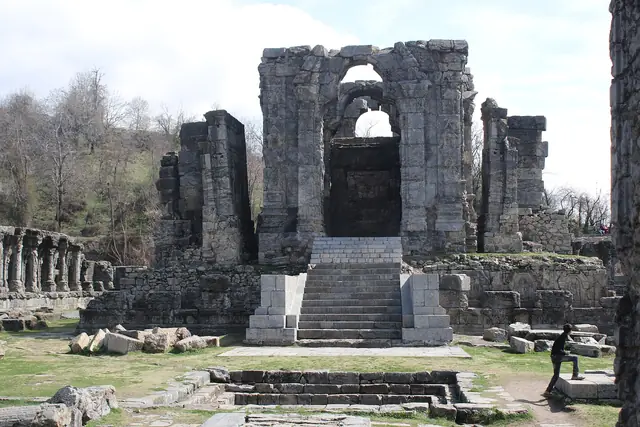
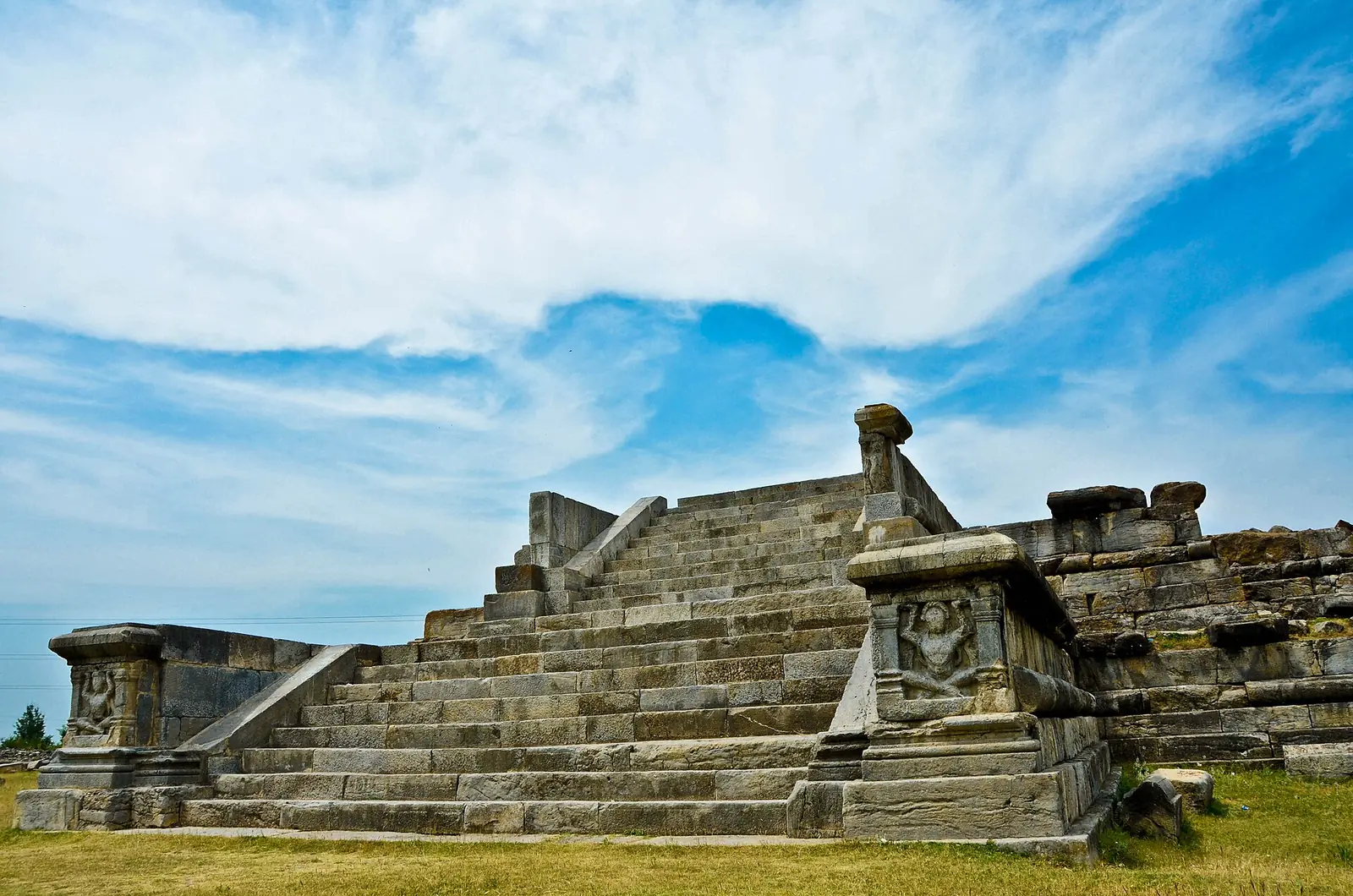
The city did not last long as a capital. Kalhana records that a century and a half later King Shankaravarman (r. 883–902) carried off materials from Parihasapura for his new town at Pattan, and later kings, Harsha among them, stripped temples of their metal images in times of need. Earthquakes and the centuries did the rest; Jonaraja records that under Sultan Sikandar (r. 1389–1413) the temples of the valley were broken one after another. What you see at Parihaspora today are the massive stone plinths of the stupa, the chaitya and the Rajavihara, with huge blocks scattered as if thrown down, on the open karewa near the village of Divar.
The life of this place
- c. 724–760 CELalitaditya builds Parihasapura and its temples (Rajatarangini IV).
- 883–902 CEShankaravarman removes materials from Parihasapura for his town at Pattan (Rajatarangini V).
About 22 km north-west of Srinagar off the Baramulla road; an ASI site on open ground.