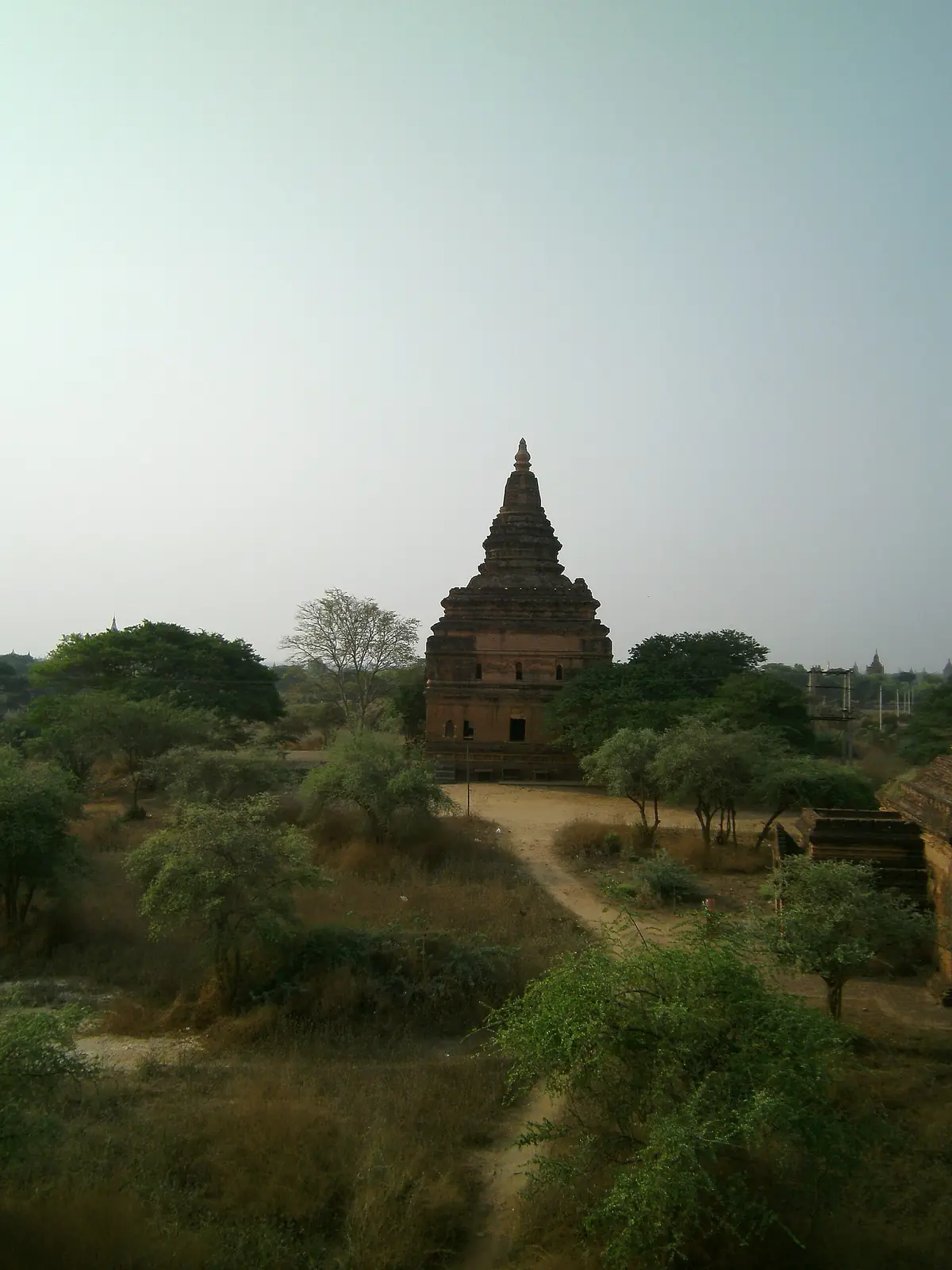
01Vishnu at Bagan
The kings of Pagan were Buddhists, but their court kept Brahmins for coronations and royal rites, and Tamil and other Indian merchants lived in the city. Nathlaung Kyaung was their temple, built in brick on a square plan with a central core and a corridor around it, a form later Buddhist temples of Bagan took up. Niches on the outer walls held images of the avatars of Vishnu, of which several remain, and in the sanctum stood Vishnu himself. A Tamil inscription found at Myinkaba nearby records a gift to a Vishnu temple by a South Indian donor, proof that Vaishnava worship was alive in Pagan. The Burmese name means the shrine where the spirits were confined.
02What survives
The temple was damaged in the earthquake of 1975 and has been repaired since. The great image of Vishnu that once stood inside is gone, and of the ten avatars in the outer niches only some can still be seen. Bagan, with this temple among its monuments, was inscribed as a World Heritage Site in 2019. It stands just west of the tall Thatbyinnyu temple, a short walk from the Tharabha gate.
The life of this place
- c. 11th centuryThe temple is built, most likely under Anawrahta.
- 1975An earthquake damages the temple.
- 2019Bagan is inscribed as a World Heritage Site.
Inside the old walled city of Bagan, west of Thatbyinnyu. Check current travel advice for Myanmar before going.