01The Kadamba plates
Halasi lies in the Khanapur taluka of Belagavi district, on the edge of the forest. In the 1850s a set of copper plates was dug out of a mound near a small well called Chakratirtha outside the town. They are grants of the early Kadamba kings, from Kakusthavarma through Mrigeshavarma and Ravivarma to Harivarma, between about 430 and 520, and they name the town Palashika. Most record land given to Jain monks of several orders, Shvetapata, Nirgrantha and Kurchaka, and to the worship of the Arhats, though the kings themselves were Brahmanas who performed Vedic sacrifice. No building of that age has been found, but the plates make Halasi one of the Kadamba capitals with Banavasi.
02Varaha-Narasimha
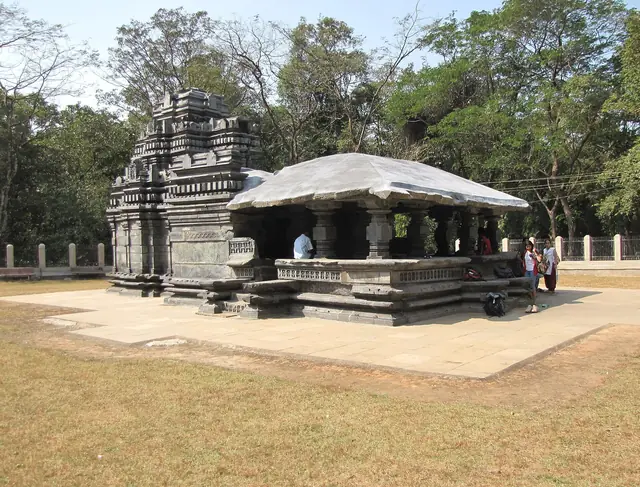
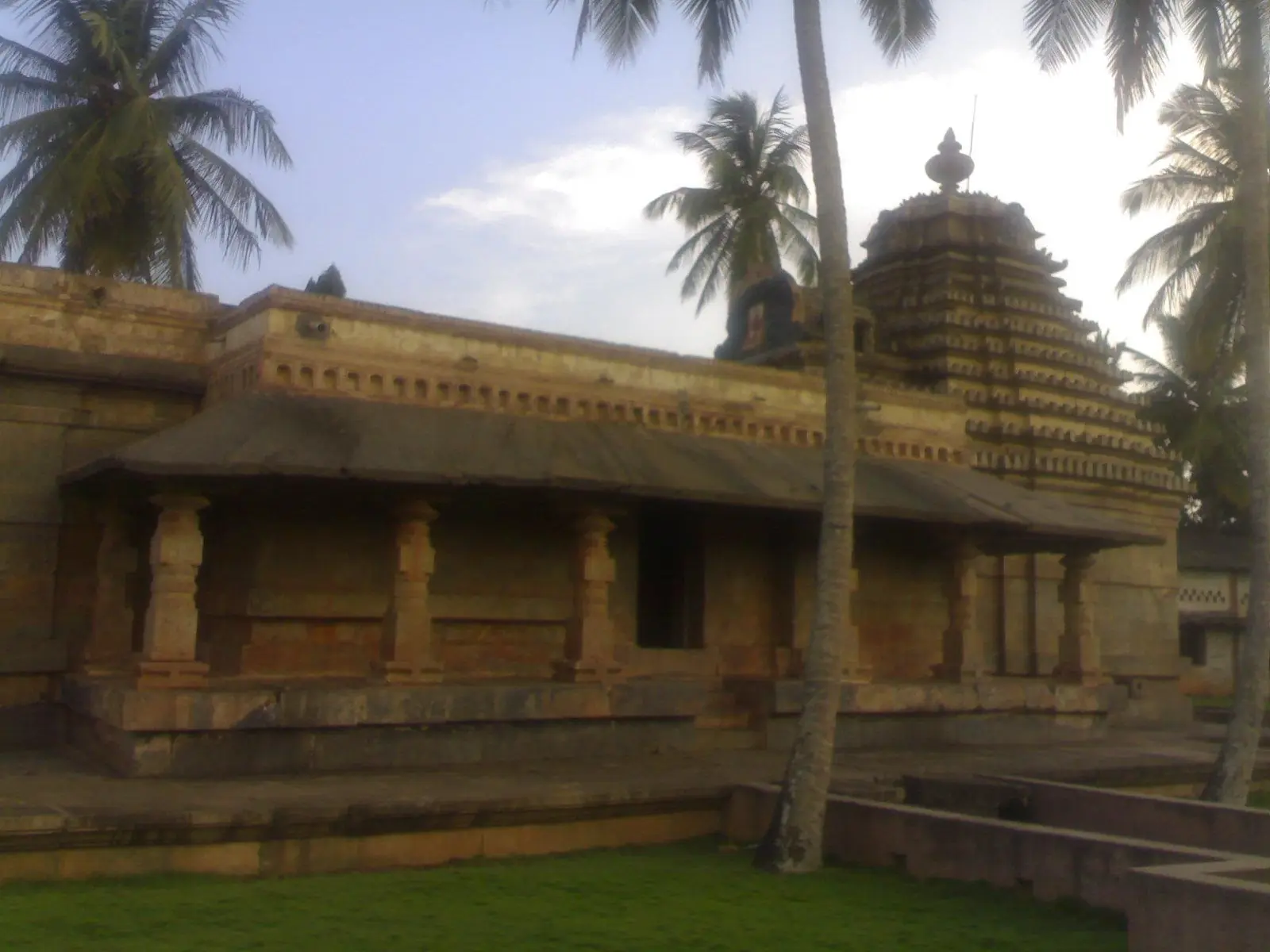
Halasi was a seat of the Goa Kadambas around the turn of the eleventh century, and their temples still stand. The Varaha-Narasimha temple has two sanctums facing each other: Vishnu seated in one, Bhuvaraha lifting Bhudevi on his tusk in the other. A stone tablet inside records that in 1169 the Goa Kadamba king Shivachitta Permadi gave a village for worship of the holy Narasimha of Halasi, with a second grant of Vijayaditya II in 1171–72. Nearby are the Suvarneshvara and Kalameshwara temples of Shiva and a ruined Jain basadi. A fair is held at the temple on the full moon of Ashvin, and on Kartik Purnima Narasimha’s palanquin goes in procession to the Rameshvara temple on the hill.
The life of this place
- c. 430–520Kadamba kings issue grants from Palashika.
- 1169Shivachitta Permadi’s grant to the Varaha-Narasimha temple is engraved.
- 1850sThe Kadamba copper plates are found near Chakratirtha.