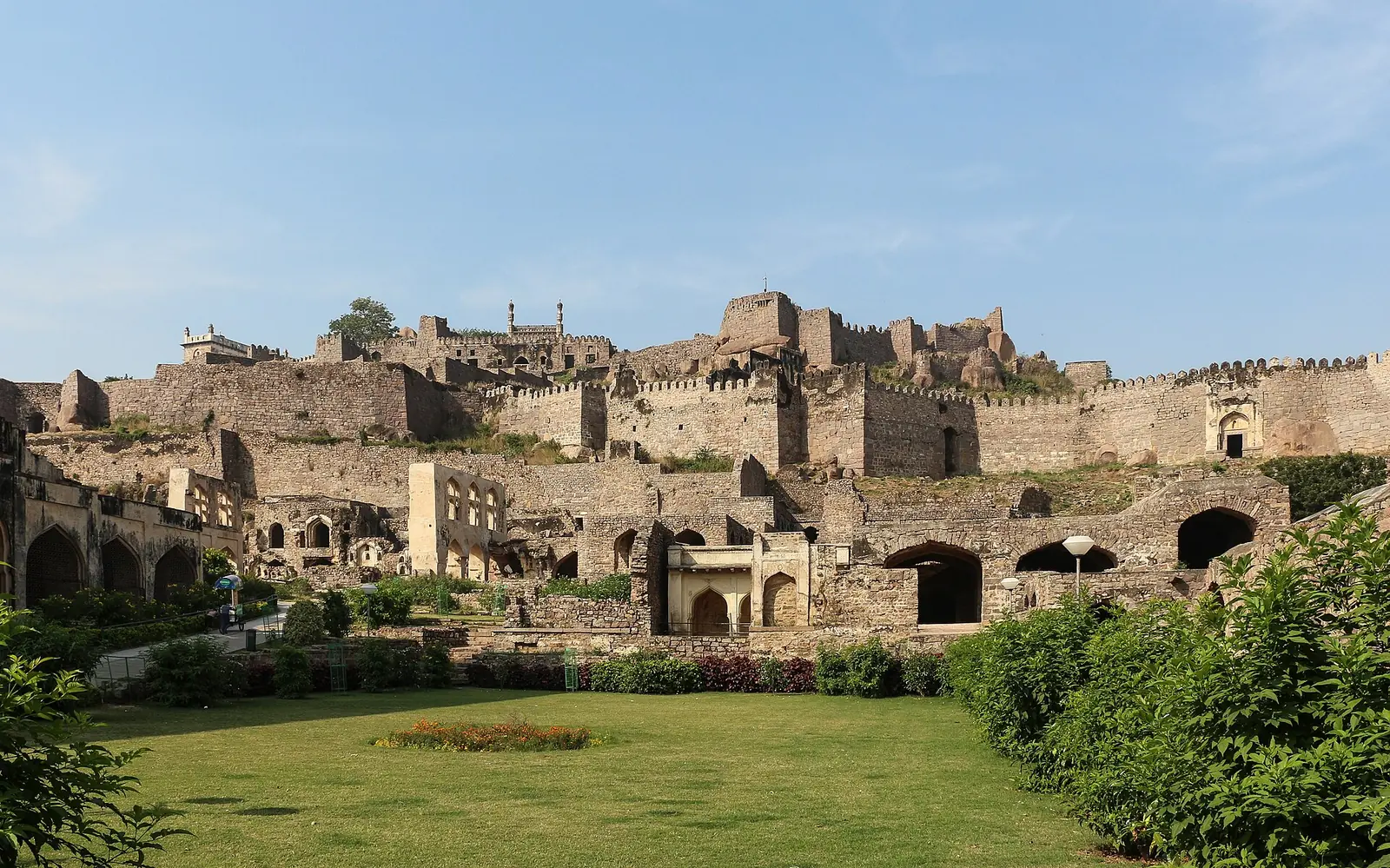
01The shepherd’s hill
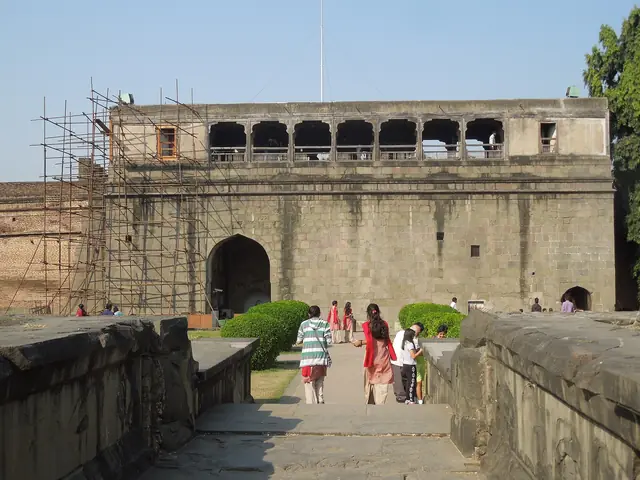
Golla konda means the shepherd’s hill. The Kakatiyas held a mud fort here called Mangalavaram. In 1364, to end a ruinous war, Musunuri Kapaya Nayaka’s son Vinayaka Deva having been killed, Kapaya Nayaka gave Golconda to the Bahmani Sultan Muhammad Shah I as part of the peace. In 1518 the Bahmani governor Quli Qutb Mulk made himself independent, and his Qutb Shahi successors turned the hill into a city of three walls, palaces and the famous acoustic gate, where a clap at the entrance carries to the top. The diamonds of the Krishna valley were cut and sold here.
02Madanna, Ramadasu and the fall
Under the last sultan, Abul Hasan Tana Shah, the real power lay with two Brahmin brothers, Madanna and Akkanna, his ministers, who allied with Shivaji in 1677. They were murdered in a court conspiracy in 1686. Bhakta Ramadasu was imprisoned in a cell of this fort. In 1687 Aurangzeb besieged Golconda for eight months; it fell in September only when Abdullah Khan Pani, an officer inside, opened a gate. On the highest point stands the shrine of Jagadamba Mahakali, where Hyderabad’s Bonalu festival begins each Ashadha.
The life of this place
- 1364Kapaya Nayaka cedes Golconda to the Bahmani Sultan.
- 1518Quli Qutb Mulk founds the Qutb Shahi kingdom with Golconda as capital.
- 1677Shivaji is received at Golconda (Hyderabad) and makes an alliance with Tana Shah through Madanna.
- 1687Aurangzeb takes the fort after an eight-month siege.
In west Hyderabad. Go in the morning for the climb to the Mahakali shrine; the evening sound-and-light show is at the Clapping Portico.