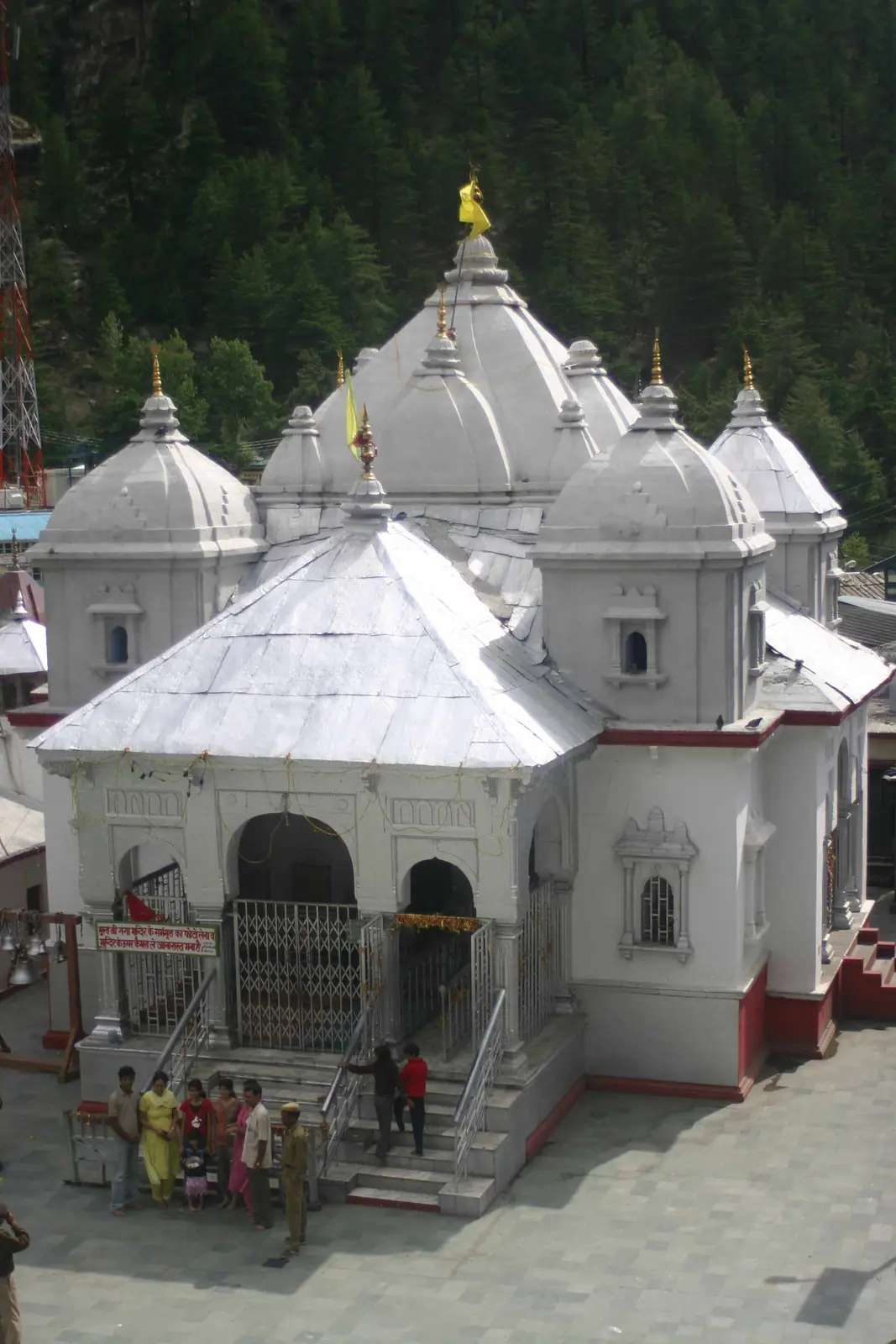
01Bhagiratha’s stone
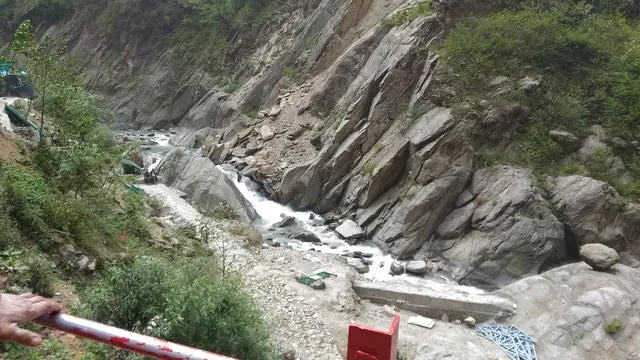
The Valmiki Ramayana tells how the sixty thousand sons of King Sagara were burnt to ash by the glance of Kapila Muni, and only the waters of heavenly Ganga could free them. Generations later their descendant Bhagiratha stood in tapas until Ganga agreed to come down; Shiva caught her in his matted hair so that her fall would not split the earth, and let her out in streams. The flat rock beside the temple is the Bhagiratha Shila where he is said to have sat. In winter, when the river runs low, a natural rock linga becomes visible in the water, where Shiva is said to have received her.
02Winter at Mukhba
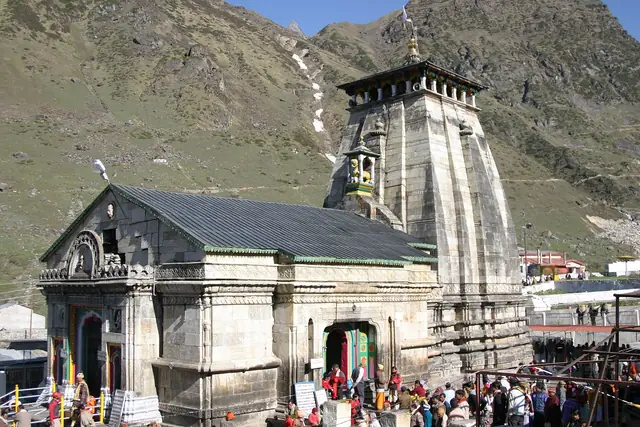
The white granite temple was built in the early 19th century by the Gorkha general Amar Singh Thapa, when Garhwal was under Nepal, and later repaired by the royal family of Jaipur. Its priests are the Semwal families of Mukhba village. The doors open on Akshaya Tritiya and close on the day after Diwali, when the murti of Ganga is carried in a doli to Mukhba, 25 km downstream, for the winter. Pilgrims carry Gangotri water in sealed pots to pour on Shiva at Rameswaram, at the other end of Bharat.
The life of this place
- Early 19th centuryAmar Singh Thapa builds the present temple.
Open from Akshaya Tritiya (April–May) to Diwali. Permits for the Gaumukh trek are issued at the Gangotri National Park office and are limited per day.