01The court Brahmins
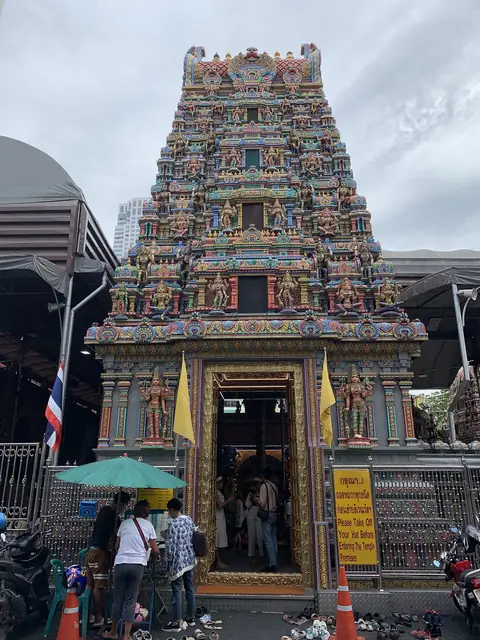
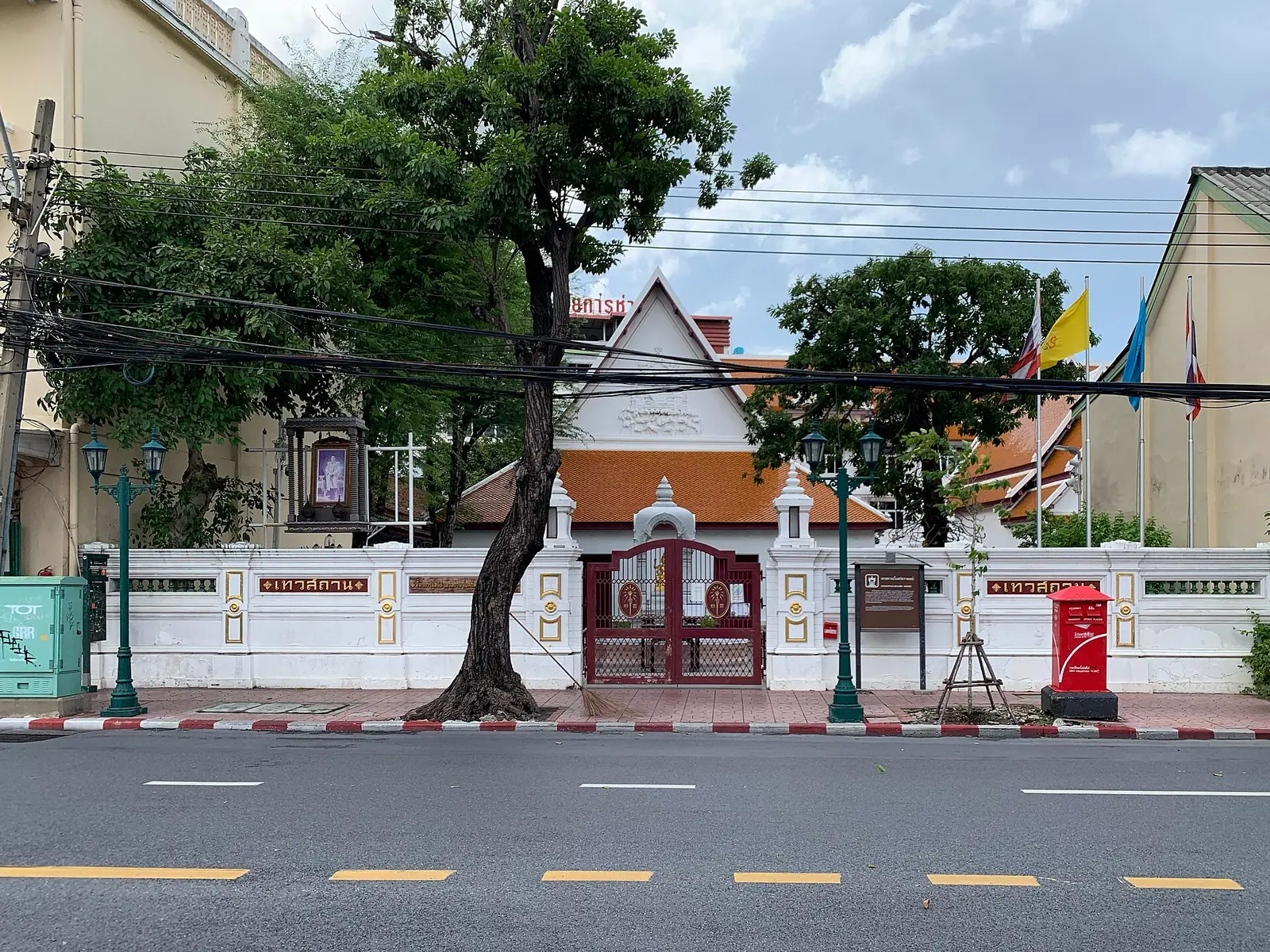
Siamese kings from Sukhothai and Ayutthaya onwards kept Brahmins to perform coronations, the ploughing ceremony and other rites of kingship, and the lineage at Bangkok traces its ancestors to Brahmins of Rameswaram and the Tamil coast. When Rama I founded his new capital in 1782 he gave them this temple, completed in 1784. Three white halls stand in a walled compound. The largest holds Phra Isuan, Shiva, in bronze with Uma and Nandi; the middle one five images of Ganesh; the northern hall Phra Narai with Lakshmi and Bhudevi. The priests still wear white, keep the topknot and chant in a Thai-accented Sanskrit and Tamil.
02The Giant Swing
Across the road stands the Sao Ching Cha, the Giant Swing, a red teak frame over twenty metres tall, raised in 1784 for the Triyampawai rite. The name is the Tamil Tiruvempavai, the hymns of Manikkavachakar sung in Margazhi, and the festival keeps that season, December–January, when Shiva is believed to come down to earth. Teams of young men swung in great arcs to snatch a bag of coins from a tall pole, in honour of his visit. After fatal accidents the swinging was stopped in 1935, but the Brahmins still hold Triyampawai at the temple every year. The swing’s timbers were renewed in 2007.
The life of this place
- 1784Rama I founds the temple and raises the Giant Swing.
- 1935The swinging rite on the Giant Swing is discontinued.
- 2007The Giant Swing is rebuilt with new teak.
Dinso Road beside Wat Suthat, old Bangkok. The compound is open to respectful visitors; the Triyampawai rites fall in December–January.