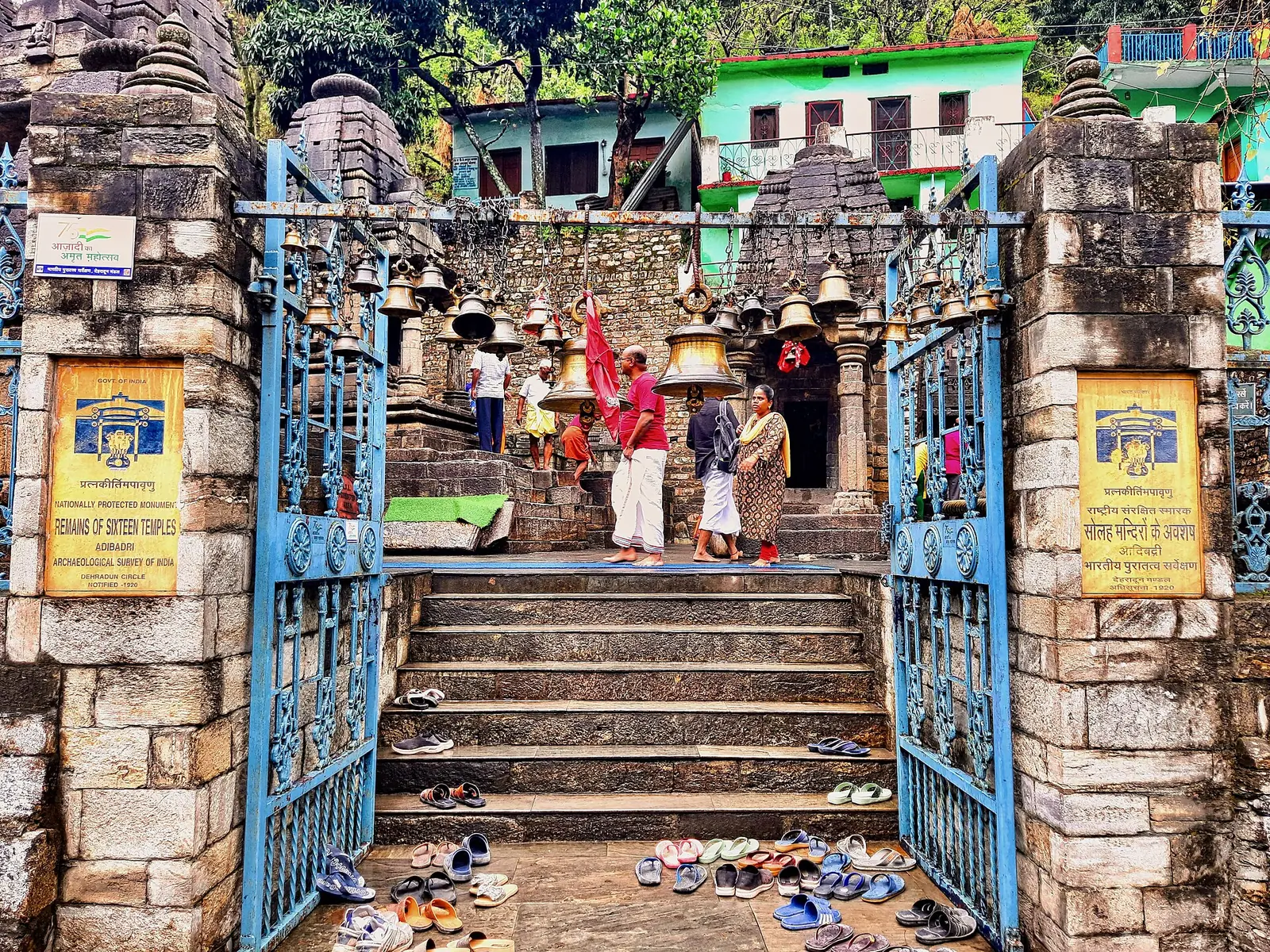
01Badri before Badri
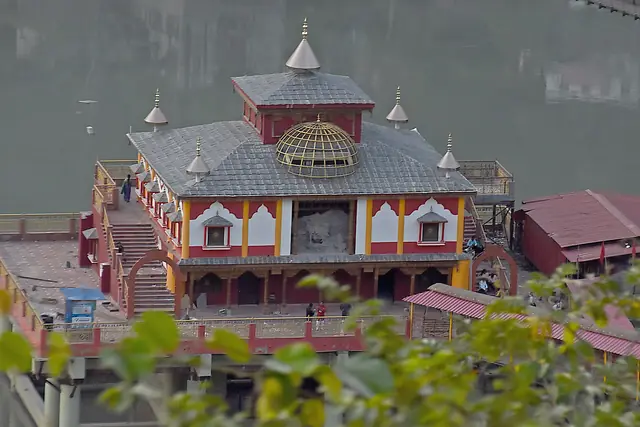
Adi means first. The Garhwal tradition holds that pilgrims who could not reach Badrinath when snow shut the high valley took darshan of Narayana here, and that Adi Shankaracharya raised these shrines as he went up to restore the worship at Badrinath. The main temple stands on a raised platform with a pyramidal shikhara; in its sanctum is a black stone Narayana about a metre tall, holding the gada, the chakra and a lotus. Smaller shrines of Lakshmi-Narayana, Rama-Lakshmana-Sita, Ganesha, Surya, Gauri-Shankar, Hanuman and others crowd round it.
02Stones of the Himalayan Nagara
The shrines are built of dressed stone without mortar, with curvilinear Nagara towers capped by amalakas, the same family of building seen at Jageshwar and Baijnath. Surveys date seven of the shrines to the late Gupta age, between the 5th and the 8th centuries; others were added later. Three kilometres away are the ruins of Chandpur Garhi, the fort of the Panwar kings of Garhwal before they moved their seat to Srinagar.
The life of this place
- c. 5th–8th centuryThe oldest shrines of the group are built.
Adi Badri is about 17 km from Karnaprayag on the Ranikhet road. The temples close for a month in winter (Paush); check with the priests before going.