
Bharata is the land’s own ancient name, found in the Puranas, the Mahabharata and the Hathigumpha inscription of Kharavela. India came through Persian and Greek from Sindhu, the river. Article 1 of the Constitution keeps both: India, that is Bharat.
The proof
- Kharavela’s Hathigumpha inscription at Udayagiri, Odisha, uses Bharadhavasa (Bharatavarsha) for the land his armies crossed.
- The inscriptions of the Persian king Darius I, around 500 BCE, name the Indus province Hindush, the root of the Greek Indos and India.
- Constitution of India, Article 1(1): India, that is Bharat, shall be a Union of States.
01Two names, one land
Bharatavarsha, the varsha of Bharata, is the name the Vishnu Purana gives to the land between the Himalaya and the southern sea, and every sankalpa at a puja still uses it. Outsiders named the land for its great river: Sindhu became Hindu in Persian, Indos in Greek, India in Latin. Both names are old. The Constituent Assembly debated the wording in September 1949 and chose to carry both into the first line of the Constitution.
Read on
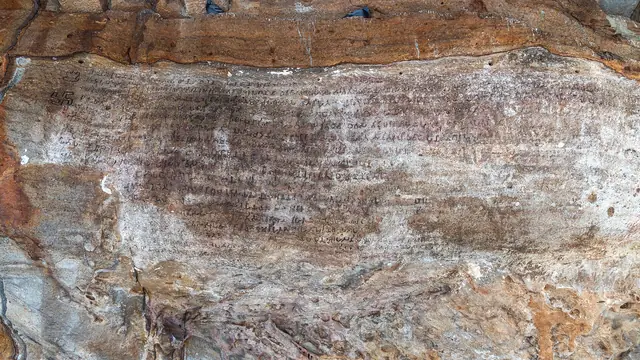
Hathigumpha inscription of Kharavela
Seventeen lines in Prakrit and Brahmi recording, year by year, the reign of Kharavela, the Jain emperor of Kalinga.
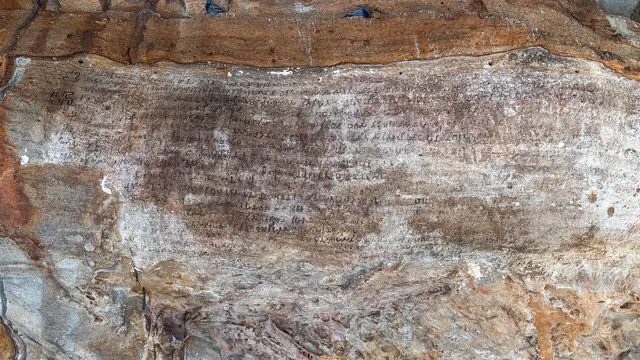
Kharavela
Kharavela of the Mahameghavahana line ruled Kalinga and set down his reign, year by year, in seventeen lines cut over the Hathigumpha cave at Udayagiri near Bhubaneswar. He marched on Magadha and brought home the Jina image a Nanda king had taken from Kalinga.
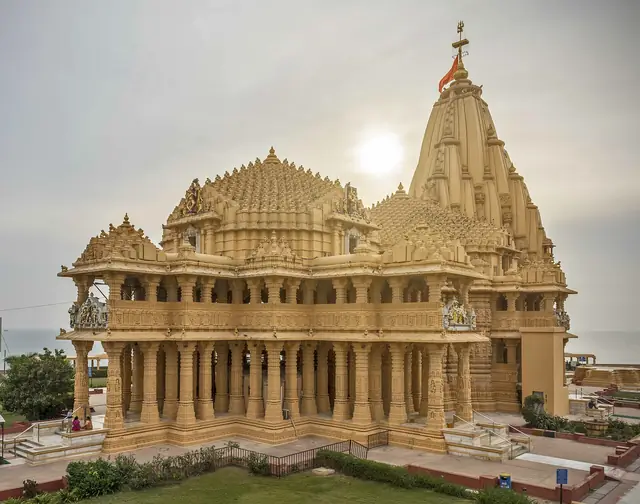
Independent Bharat
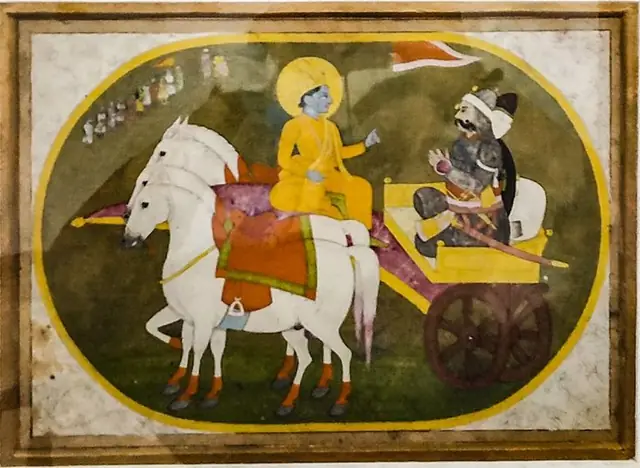
Chandravansha (Lunar line: Yadavas, Pauravas and Kurus)
The Lunar dynasty runs from Soma through Budha and Pururavas to Yayati, whose sons Yadu and Puru founded the Yadava and Paurava houses. From Puru came Bharata, after whom the land is named, and Kuru, whose descendants fought at Kurukshetra.