01Their own era
The Kalachuris counted years in the Kalachuri-Chedi era, which begins in 248–49 CE, and their copper plates are dated in it. Kokalla I, in the late ninth century, married into the Rashtrakuta and Chandela houses and made Tripuri a power. Yuvarajadeva I kept the poet Rajashekhara at his court for a time, and his queen Nohala built a Shiva temple at Bilhari, recorded in the Bilhari inscription. The Chausath Yogini temple at Bhedaghat, a ring of sixty-four goddesses open to the sky above the marble gorge of the Narmada, belongs to their country and age.
02Gangeya and Karna
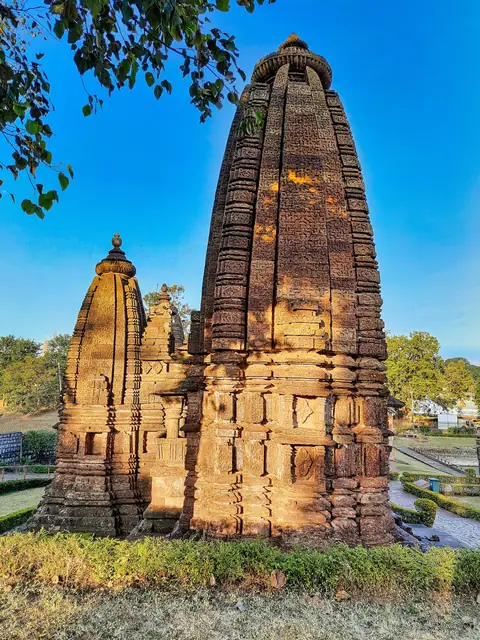
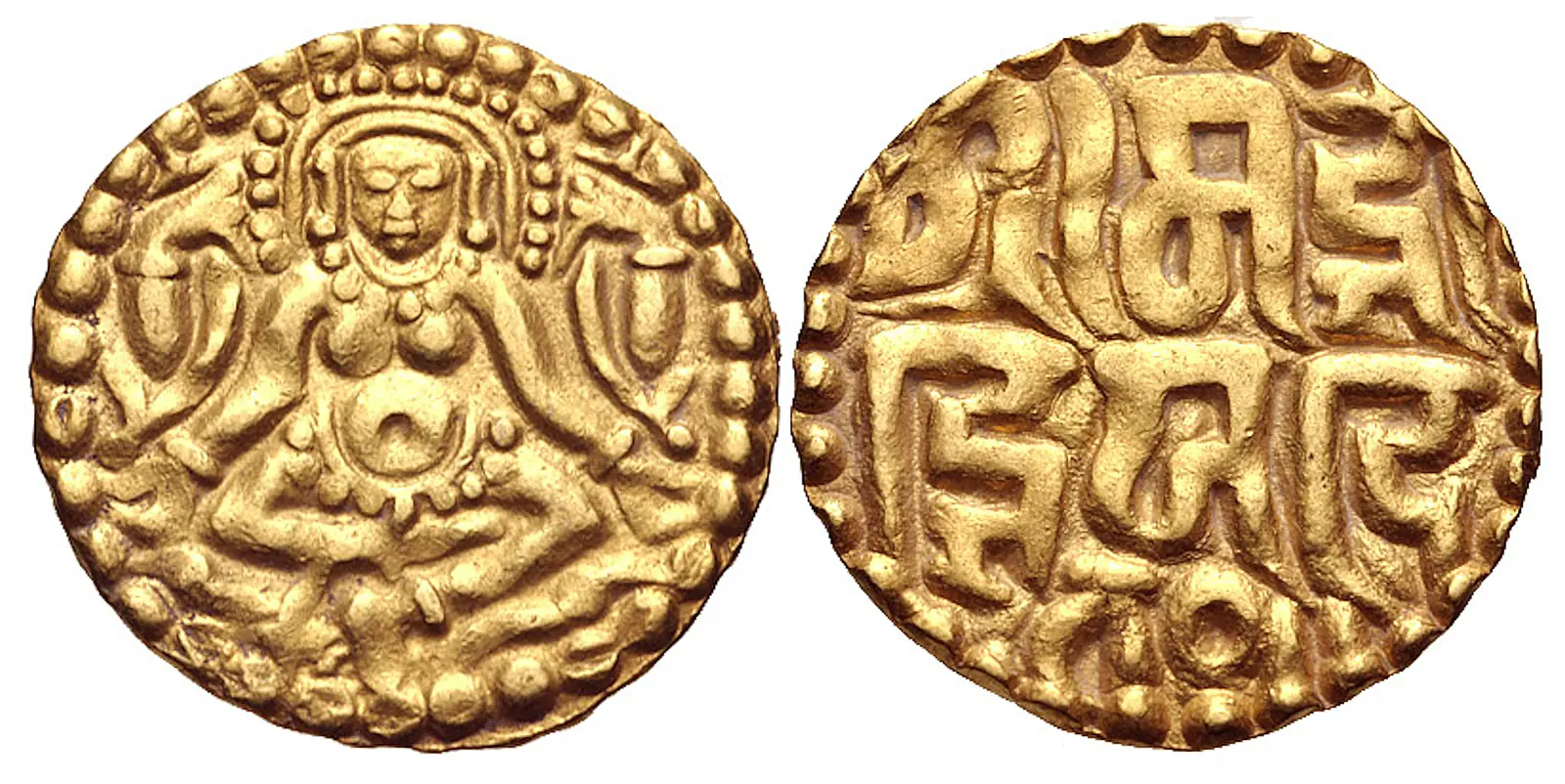
Gangeyadeva took the title Vikramaditya and pushed north to Prayag and Kashi. His gold coins, with the seated figure of Devi Lakshmi on one side and his name in Nagari on the other, were copied by kings across the north for two centuries. His son Lakshmi-Karna joined the Chaulukya Bhima I against Bhoja of Dhar, raided Bengal and Kalinga, and built a temple at Kashi called the Karnameru. The temples at Amarkantak, at the source of the Narmada, are credited to his reign.
03Decline
After Karna the Kalachuris lost ground to the Chandelas, the Paramaras and the Gahadavalas, who took Kashi from them. Queen Alhanadevi, mother of Narasimha, built a Shiva temple at Bhedaghat and left an inscription there dated 1155. The last known king, Trailokyamalla, issued grants into the early thirteenth century, after which the Chedi country passed to the Chandelas and then to local chiefs.
The rulers
- 1Kokalla IMade Tripuri a powerc. 850–890
- 2Shankaraganac. 890–910
- 3Yuvarajadeva IRajashekhara at his courtc. 915–945
- 4Lakshmanarajac. 945–970
- 5Yuvarajadeva IIc. 970–990
- 6Kokalla IIc. 990–1015
- 7GangeyadevaLakshmi gold coins; reached Prayagc. 1015–1041
- 8Lakshmi-KarnaHeight of power; Karnameru at Kashic. 1041–1073
- 9Yashahkarnac. 1073–1123
- 10Gayakarnac. 1123–1153
- 11Narasimhac. 1153–1163
- 12Jayasimhac. 1163–1188
- 13Vijayasimhac. 1188–1210
- 14TrailokyamallaLast known kingc. 1210–1212
What they left
- Chausath Yogini temple, Bhedaghat
- The Kalachuri temples at Amarkantak
- Seated-Lakshmi gold coins, copied across the north
- Copper plates dated in the Kalachuri-Chedi era