
Maharshi Veda Vyasa
End of the Dvapara Yuga (traditional); a chiranjivi · Born on an island in the Yamuna; ashram at Badari · Sanskrit
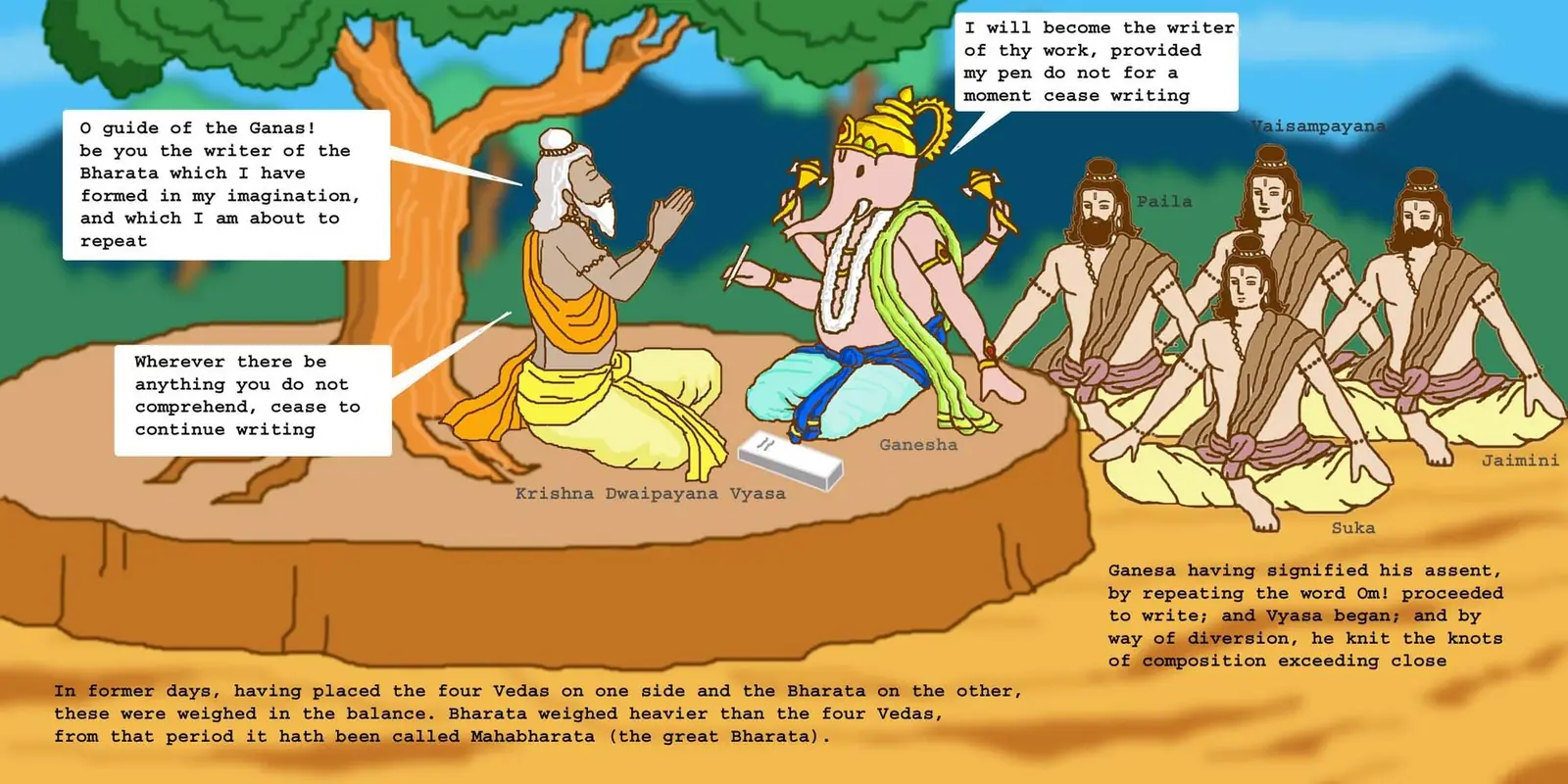
Maharshi VyasaKrishna Dvaipayana, the dark one born on an island, was the son of Maharshi Parashara and Satyavati, born on a sandbank in the Yamuna. He is called Vyasa, the arranger, because he divided the one Veda into four, the Rik, Yajus, Sama and Atharva, and gave each to a disciple: Paila, Vaishampayana, Jaimini and Sumantu. Then, the Shastras say, seeing that the people of Kali Yuga would find the Vedas hard to reach, he composed the Mahabharata, which is called the fifth Veda, and the eighteen Puranas. The Brahma Sutras are his too, under the name Badarayana. The Mahabharata itself tells that Shri Ganesha wrote it down at his dictation, on the condition that the pen never stop.
Vyasa is not only the author of the epic but a figure within it. He is the grandfather of the Pandavas and Kauravas, he gives Sanjaya the divine sight to describe the war, and he counsels Yudhishthira after it. In the Anushasana Parva, Bhishma lies on his bed of arrows and Yudhishthira asks him which one deity all should praise and by what name. Bhishma answers with the thousand names of Vishnu, the Vishnu Sahasranama, which Vyasa set down in the epic.
Vyasa is one of the seven chiranjivis, the deathless ones. Ashadha Purnima is kept as Vyasa Purnima, and on that day every guru is honoured in his name, which is why it is also called Guru Purnima.
Works
- Division of the Veda into four
- Mahabharata, including the Bhagavad Gita and the Vishnu Sahasranama
- The eighteen Mahapuranas
- Brahma Sutras (as Badarayana)