
Kanaka Dasa
1509–1609 CE · Bada and Kaginele (Haveri), Karnataka; Udupi; Tirupati · Kannada
KanakadasaThimmappa Nayaka was born at Bada near Bankapura, in a family of the shepherd community that held a small chiefdom under Vijayanagara, and grew up a soldier. The tradition says he found a buried treasure and spent it on the temple of Adikeshava at Kaginele, which is why he was called Kanaka, gold. Wounded in battle and spared, he gave up the sword, and the Lord of Kaginele became the centre of his life. He signed his songs Kaginele Adikeshava.
He too became a disciple of Vyasatirtha, alongside Purandara Dasa. The tradition tells that the guru once gave each disciple a banana and told him to eat it where no one could see. All came back with empty hands except Kanaka, who returned with the fruit uneaten: wherever he went, he said, the Lord was watching.
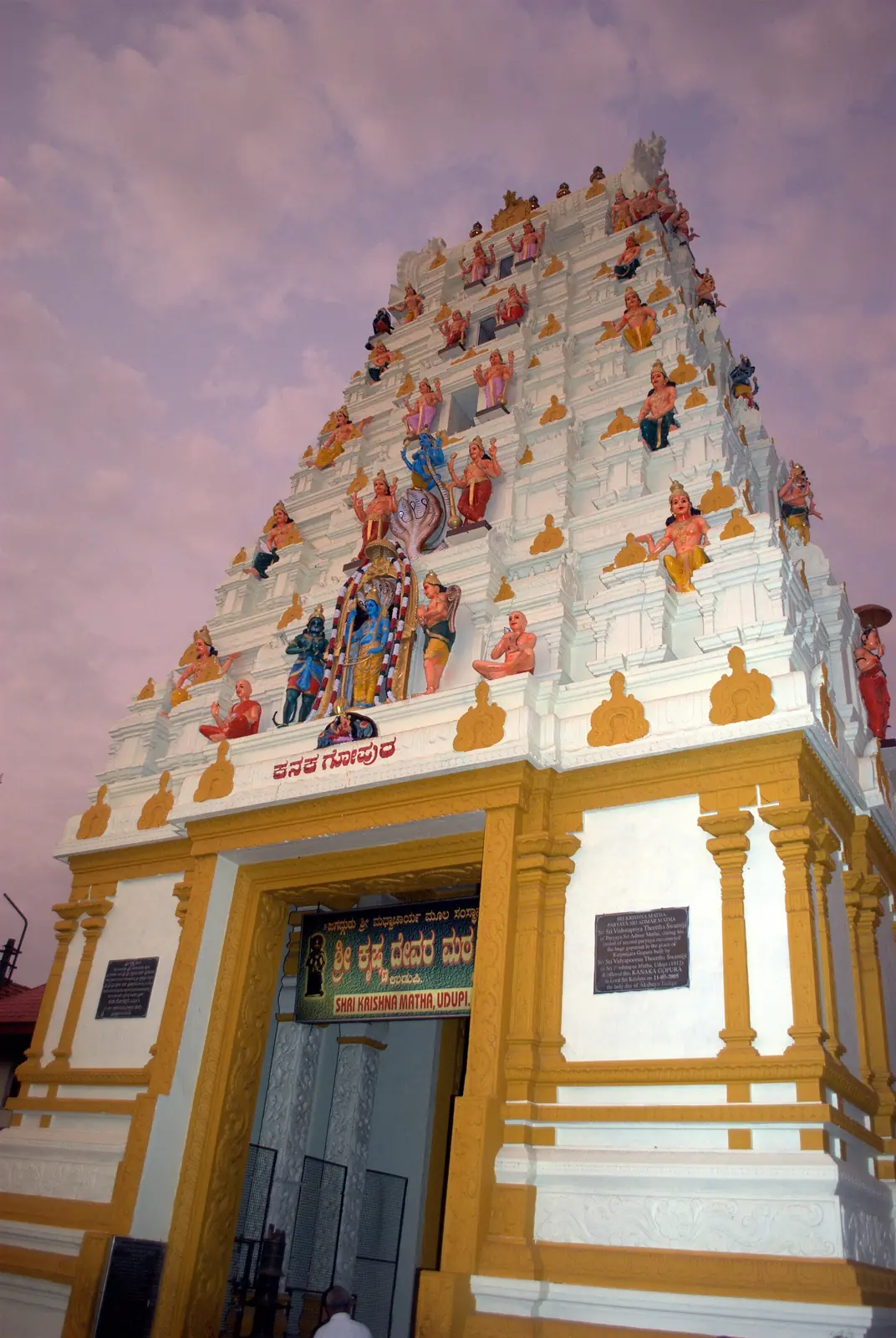
At Udupi he stood outside the temple of Shri Krishna and sang. The Udupi tradition says the image turned to face the west so that he could see it, and a crack opened in the wall at that spot. That window, the Kanakana Kindi, is the one through which pilgrims still take their first darshan of the Lord at Udupi.
Besides his kirtanas, Kanaka wrote long poems in Kannada: the Mohanatarangini, the Nalacharitre, the Haribhaktisara, and the Ramadhanya Charitre, in which ragi, the poor man's grain, wins a quarrel with rice before Shri Rama. His songs ask the question all bhakti asks, and answer it plainly: what family, what caste, when the Lord is in every heart?
Works
- Kirtanas signed Kaginele Adikeshava
- Mohanatarangini
- Nalacharitre
- Haribhaktisara
- Ramadhanya Charitre