
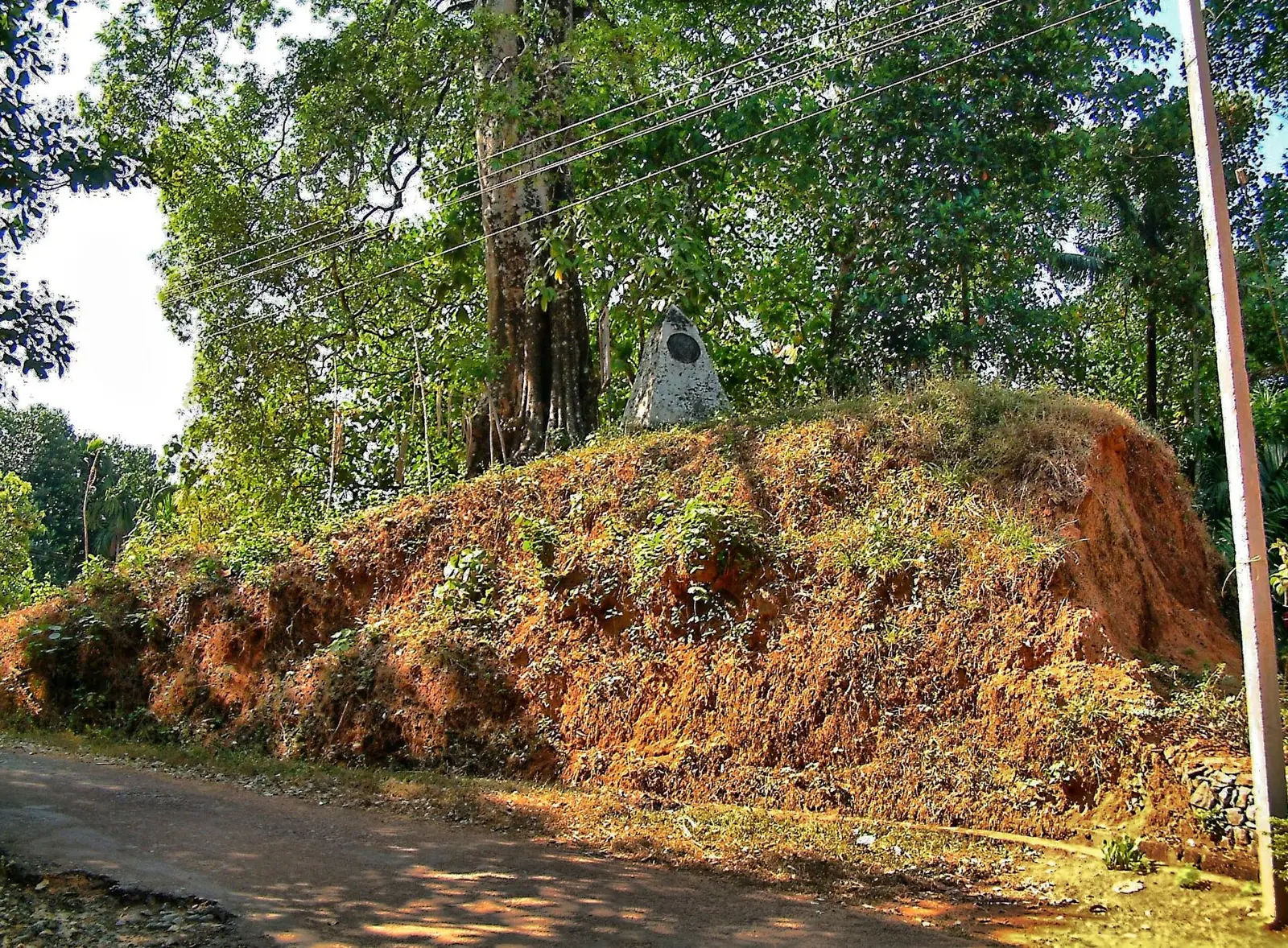
The night attack broke in panic at the ditch and Tipu himself was hurt in the fall; the Lines held until he returned with siege guns in April 1790.
01The wall of Travancore
After Hyder Ali’s conquest of Malabar, Travancore built the Nedumkotta, the ‘long fort’, a rampart of earth with a deep ditch, bastions and gates, running some thirty miles from the sea near Kodungallur to the foot of the Western Ghats. Its king, Karthika Thirunal Rama Varma, remembered as Dharma Raja, had given refuge to Hindu chiefs and Brahmin families who fled Mysore’s rule in Malabar, and he was an ally of the East India Company. Tipu claimed that part of the Lines stood on land of his vassal, the Raja of Cochin, and demanded their removal.
02Rout in the ditch
On the night of 28–29 December 1789 Tipu’s troops got inside the Lines at an unguarded point and began to clear the rampart. A small party of Travancore soldiers fired into their flank at close range from cover. The leading Mysore column panicked and fell back on the men behind it, and hundreds were crushed or killed in the ditch. Mark Wilks, the Mysore historian, records that Tipu himself fell in the crush and was hurt, and that his palanquin was left behind. In April 1790 he came back with heavy guns, breached the Lines and laid waste the country to the Periyar, but by then the Company had declared war.
The repulse at the Nedumkotta kept Travancore out of Mysore’s hands, and Tipu’s attack on a Company ally brought on the war that cost him half his kingdom in 1792.