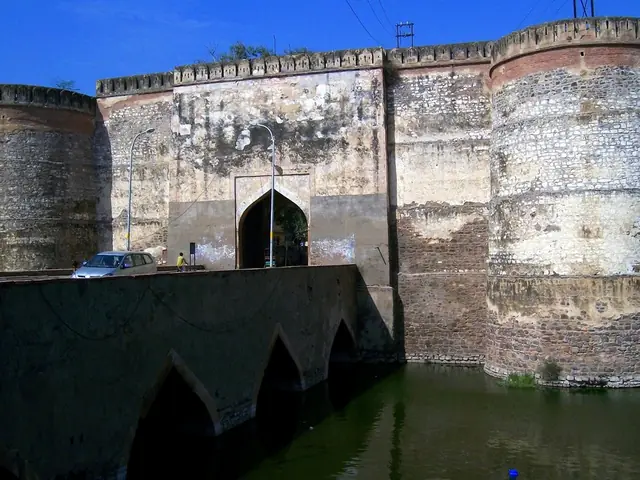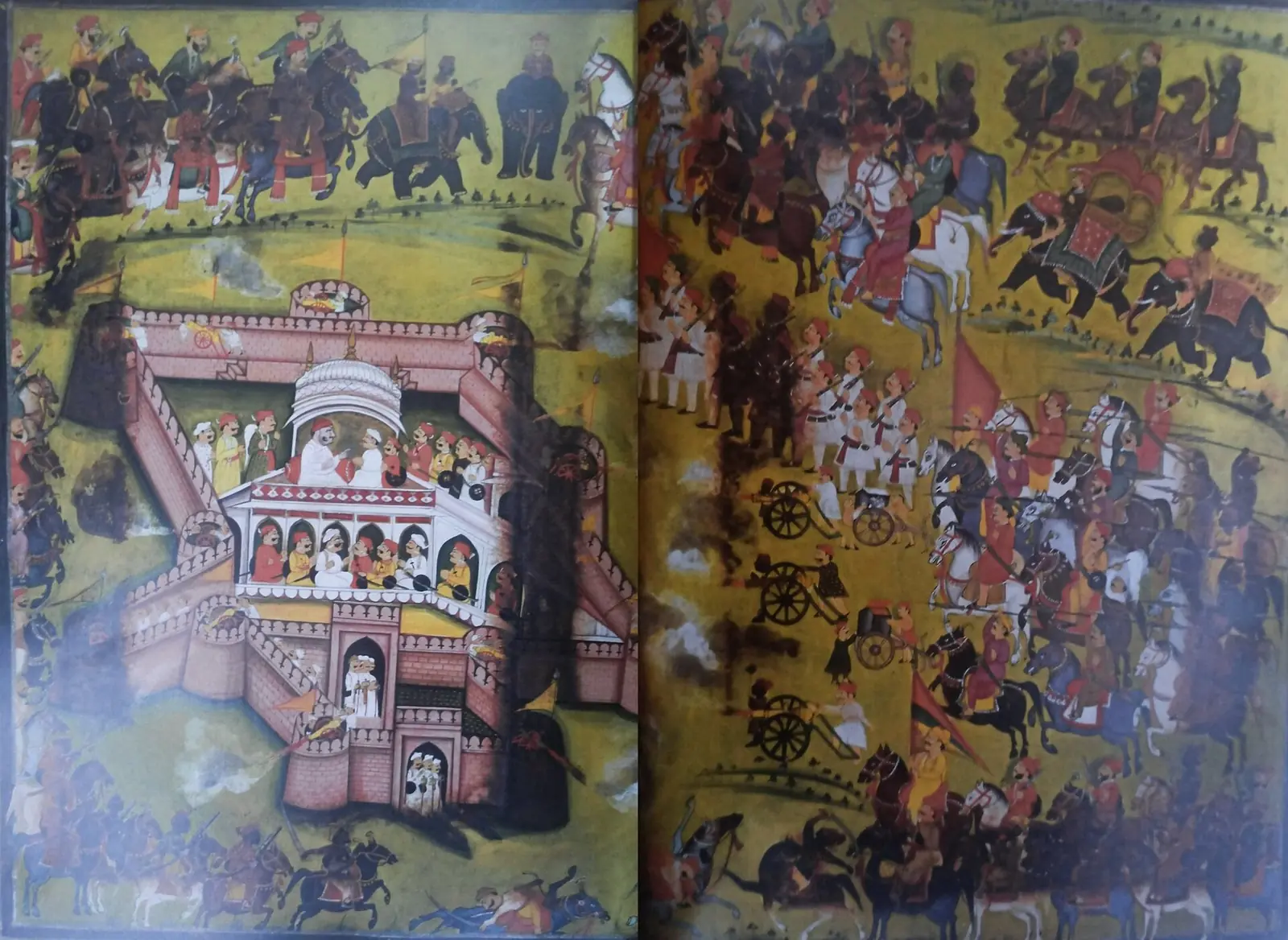
The fort held for four months; the siege ended in a treaty by which Suraj Mal agreed to pay the Marathas a sum in instalments.
01The guns at Kumher
In 1754 Raghunathrao led a Maratha army into Hindustan to collect tribute, and the Mughal wazir’s rivals drew it against the Jat king Suraj Mal. Suraj Mal shut himself into Kumher, a mud-walled fort with deep ditches. The Marathas brought up guns and dug trenches, but the earthen walls swallowed the shot. In March 1754, while inspecting the trenches, Malhar Rao’s only son Khande Rao was killed by a shot from the fort. Malhar Rao swore to level Kumher and throw its earth into the Yamuna.
02Peace through a queen
Suraj Mal’s queen Kishori opened talks through Jayappa Scindia, the rival of Holkar in the Maratha camp, and the siege was lifted in May with a treaty under which the Jats would pay a sum to the Marathas over the coming years. At Kumher Khande Rao’s widow Ahilyabai wished to commit sati; her father-in-law stopped her and trained her to govern. She later ruled the Holkar state from Maheshwar for nearly thirty years and rebuilt temples across Bharat, among them Kashi Vishwanath in 1780.
Kumher showed the Jat mud forts could defy a Maratha army, and the Maratha–Jat quarrel it left behind weighed on the alliances before Panipat in 1761.