
The Raj jailed the leadership and crushed the rising with force by 1943–44, but Britain never again governed India with confidence.
01Karo ya maro
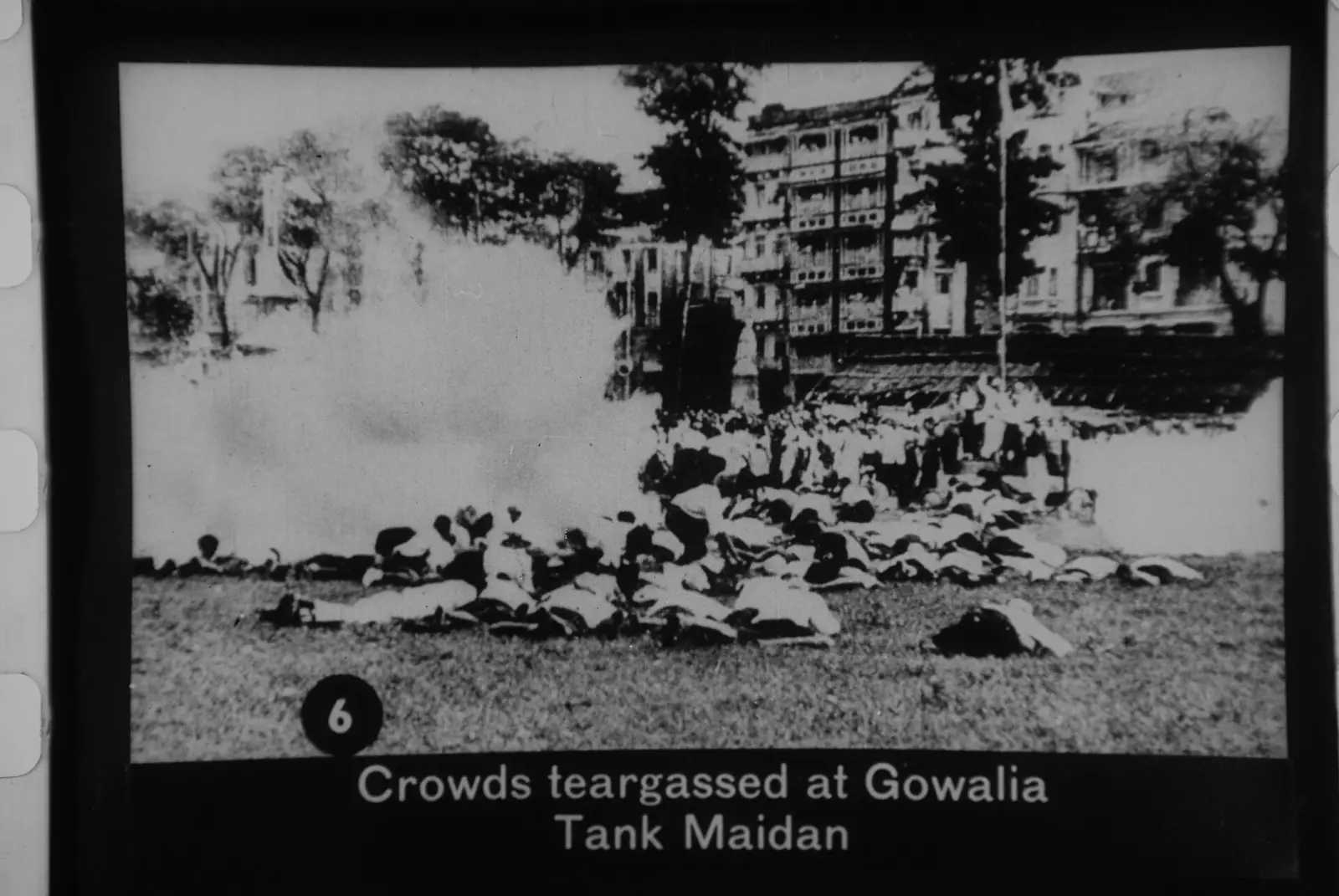
On 8 August 1942 the All-India Congress Committee, meeting at Gowalia Tank in Bombay, passed the Quit India resolution. Gandhi told the delegates that the mantra was Do or Die: we shall either free India or die in the attempt. Before dawn on 9 August the government arrested Gandhi and the whole Congress leadership. That morning Aruna Asaf Ali hoisted the flag at Gowalia Tank before the police tear-gassed the crowd. Leaderless, the country rose on its own.
02Parallel governments
Crowds attacked police stations, railway lines and telegraph wires across Bihar, the United Provinces, Bengal, Maharashtra and Odisha. In Ballia Chittu Pandey set up a government for some days; in Midnapore the Tamluk Jatiya Sarkar ran its own administration into 1944; in Satara the Prati Sarkar of Nana Patil lasted longer still. Usha Mehta broadcast the secret Congress Radio from Bombay. The Raj answered with machine-guns, collective fines and even aerial firing; official figures put arrests by the end of 1943 at over ninety thousand.
Quit India showed the Raj that it could hold Bharat only by force; five years later the British left.