
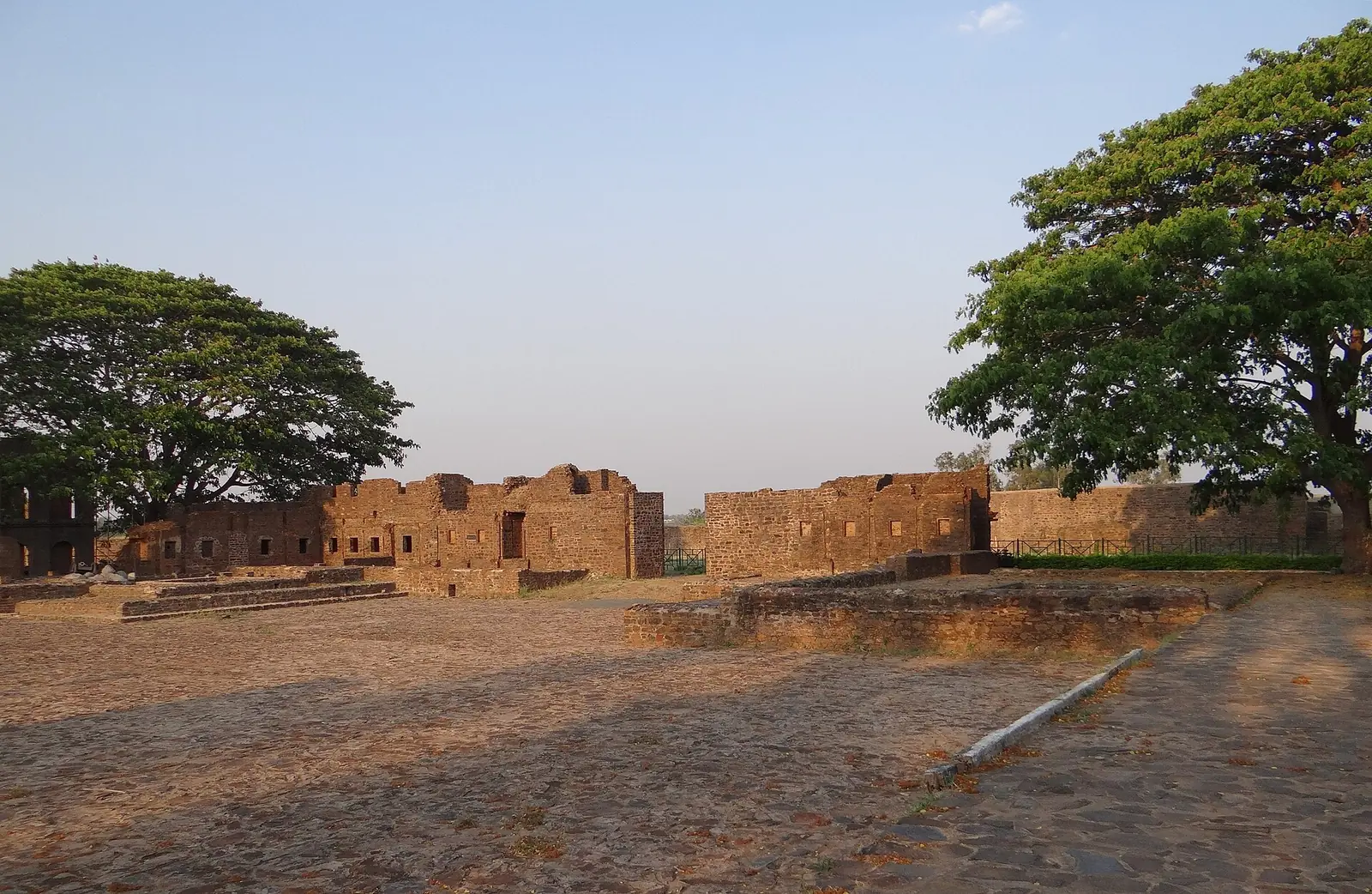
Kittur’s men beat back the first attack on 23 October and killed Thackeray; a much larger Company force took the fort in December 1824.
0123 October 1824
Raja Shivalingarudra Sarja died in September 1824 without a son of his body, having adopted a boy. The Dharwad collector, Thackeray, declared the state under Company control and moved to seal the treasury. Chennamma refused. On 23 October Thackeray brought troops and guns to the fort gate. Kittur’s men sallied out; Thackeray was shot dead, and two British officers, Stevenson and Elliot, were taken prisoner. Chennamma released them on the Company’s word that the war would end.
02The fall, and Rayanna
The promise did not hold. In December a large force with heavy guns from Sholapur and Mysore surrounded Kittur and broke the walls within days. Chennamma was taken to Bailhongal fort and kept prisoner until her death on 21 February 1829. Her commander Sangolli Rayanna escaped and kept a guerrilla war alive in the hills, until he was betrayed, captured and hanged at Nandagad in 1831. Karnataka keeps the Kittur Utsav each October, and her statue stands in the Parliament complex in New Delhi.
Kittur was one of the first armed refusals of the Company’s claim over states without a natural heir, thirty-four years before Jhansi fought the same claim.