
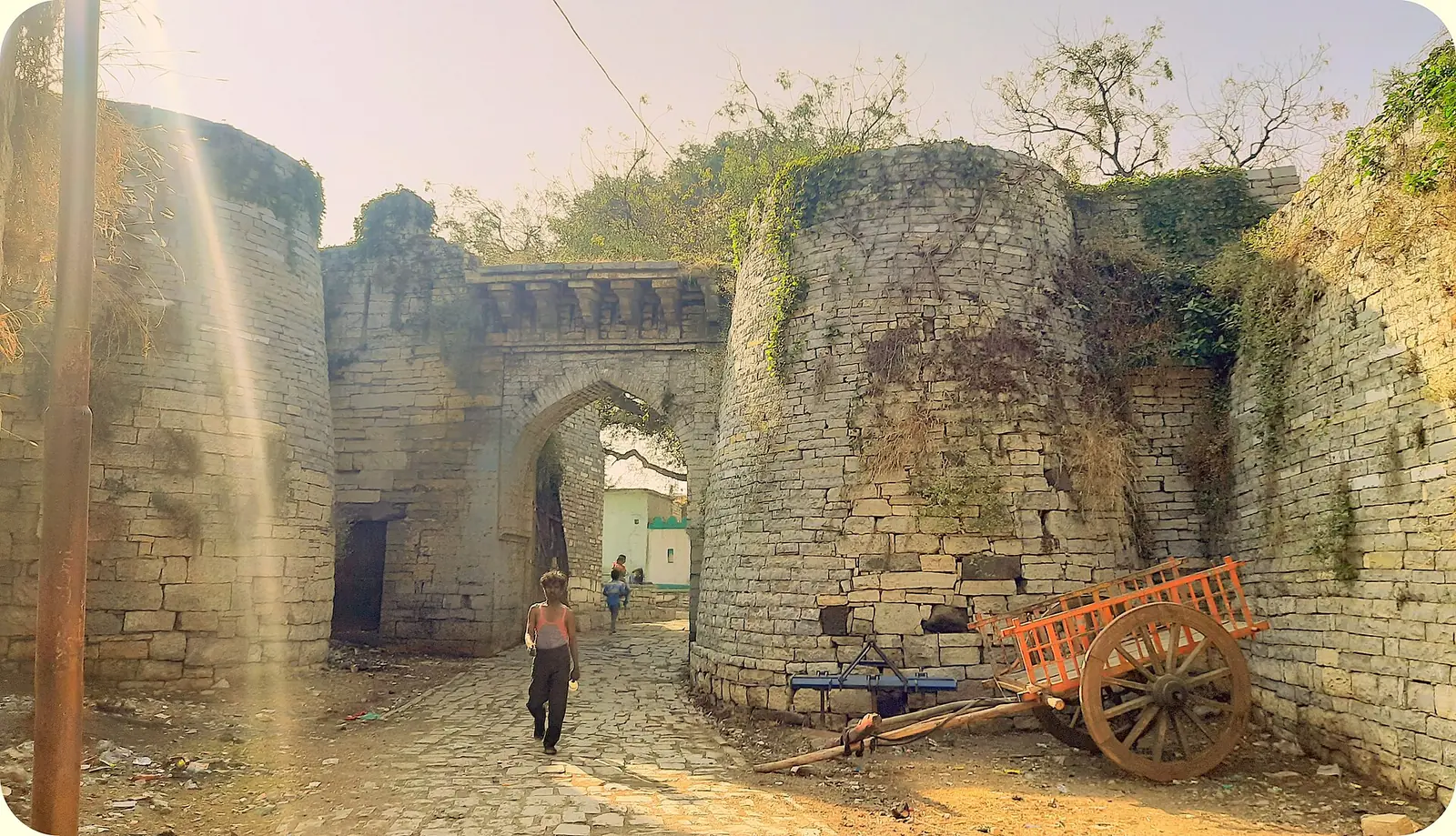
Siyaka won on the Narmada, followed the beaten army south and plundered the Rashtrakuta capital; the empire collapsed within a year.
01Fight on the river
Krishna III, the last strong Rashtrakuta, died around 967. His brother Khottiga marched north against the rising Paramaras, and the armies met at Khalighatta, the old ford of the Narmada where the Agra–Bombay road crosses today. Siyaka won. His feudatory Kanka, chief of Vagada, fell in the fighting, a loss remembered in a Vagada inscription. The Udaipur prashasti of the Paramaras, written a century later, says Siyaka was fierce as Garuda when he seized the fortune of Khottiga in battle.
02A poet dates the sack
Siyaka did not stop at the river. He followed the Rashtrakuta army across the Deccan to Manyakheta, today the village of Malkhed near Kalaburagi, and plundered it. The date comes from a poet. Dhanapala, writing his Prakrit lexicon Paiyalacchi in Vikrama year 1029, notes that it was finished when the lord of Malava had looted Manyakheta. Khottiga died soon after. In 973 his successor Karka II was overthrown by Tailapa, a Chalukya feudatory, who founded the line of Kalyani. Siyaka’s sons Munja and Sindhuraja, and his grandson Bhoja, made Dhara one of the great cities of India.
The sack of Manyakheta brought down the Rashtrakuta empire and made way for the Paramaras of Dhara and the Chalukyas of Kalyani.