
The rebels killed Mahipala II and held Varendra for a generation; Ramapala, backed by the chiefs of the Pala kingdom, crossed the Ganga, defeated and executed Bhima and won back the homeland.
01Divya’s rising
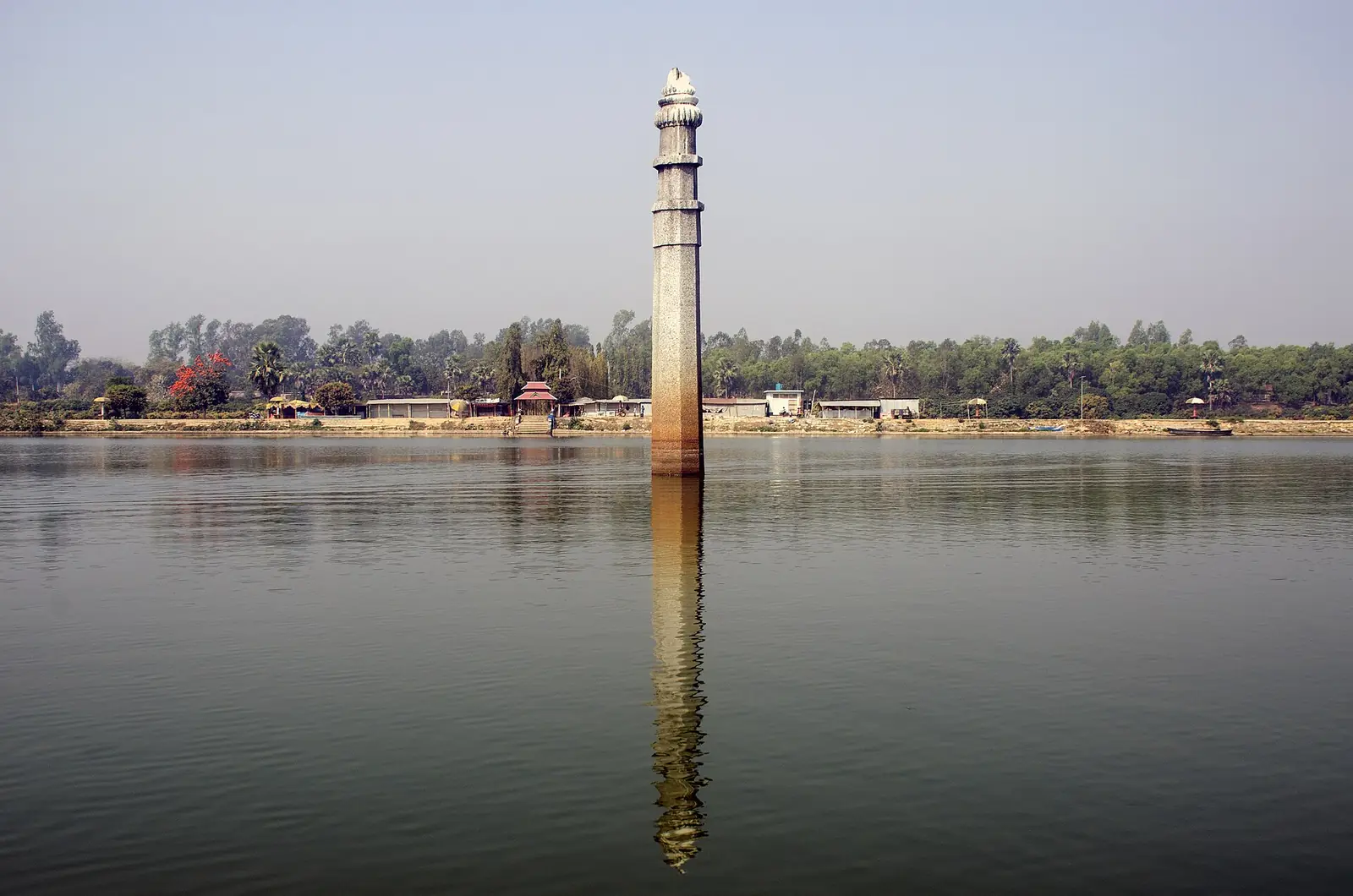
Mahipala II came to the Pala throne in a troubled time and, suspecting his brothers Shurapala and Ramapala, threw them into prison. Divya, a Kaivarta officer of the state, raised a revolt in Varendra, the old Pala heartland between the Ganga and the Karatoya. Mahipala marched against him with an unready army and was killed. Divya ruled Varendra, and after him his brother Rudoka and Rudoka’s son Bhima. A granite pillar standing in a tank at Dibar Dighi in Naogaon district has long been called Divya’s pillar.
02Ramapala’s crossing
Ramapala escaped prison, became king of what was left, and spent years winning the support of the samantas, the chiefs of the kingdom. His maternal uncle Mathana, a Rashtrakuta chief, and the lord of Magadha were among them. The allied army crossed the Ganga on a bridge of boats and met Bhima. Bhima was captured on his elephant, his camp plundered, and he was put to death. Ramapala built a new capital, Ramavati, in the recovered land. Sandhyakara Nandi’s Ramacharita, written under his son, tells the whole war in double-meaning verses that read as the Ramayana and as Ramapala’s life.
The revolt is one of the few popular risings of early medieval India told in a contemporary source, and Ramapala’s reconquest gave the Palas their last strong reign.