
Kamatapur fell and the Khen kingdom ended; Bengal held the country for a few years before the local Bhuyan chiefs drove its governor out.
01Kamatapur
After the old kingdom of Kamarupa broke up, the lands between the Karatoya and the Barnadi formed the kingdom of Kamata. In the fifteenth century it was ruled by the Khen kings, the last of them Nilambar, from Kamatapur, a walled city near present-day Gosanimari in Cooch Behar, close to the temple of the goddess Kamateshvari. Alauddin Husain Shah, the most powerful of the Bengal Sultans, attacked it with an army and a river fleet. The siege was long; the dates are not fixed with certainty, but the city fell around 1498 and was laid waste.
02Coins, then a rising
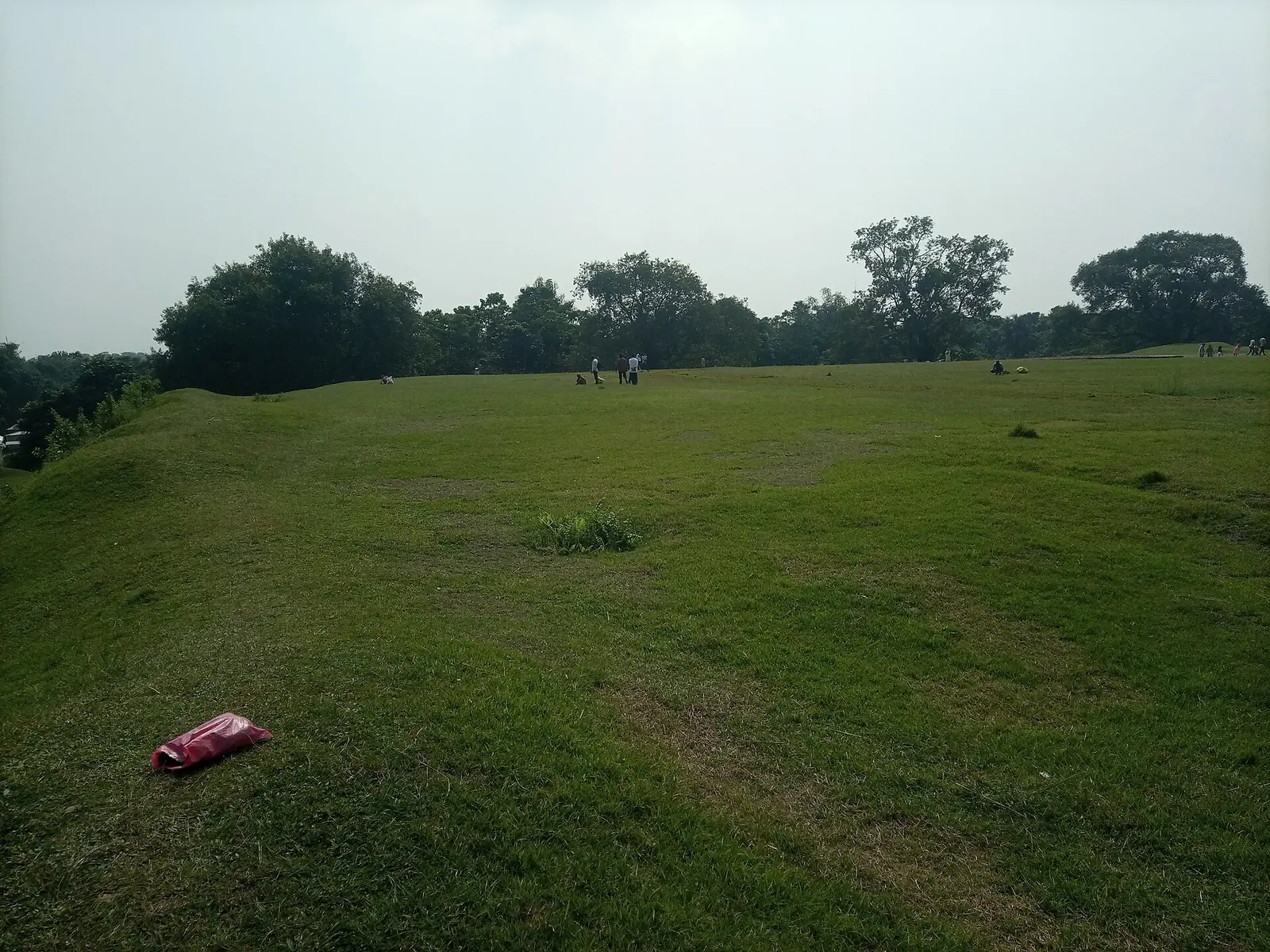
Husain Shah struck coins calling himself the conqueror of Kamru and Kamata, and placed his son Danyal in charge of the new province. The rule did not last. The Bhuyans, the local landed chiefs, rose and killed Danyal and his officers, and the country returned to their hands. Out of that unsettled land came Biswa Singha, who by about 1515 had founded the Koch kingdom; his sons Naranarayan and Chilarai made it the great power of the region. The mound called Rajpat at Gosanimari holds the ruins of the Khen capital.
The fall of Kamata ended the last successor of Kamarupa in the plains; the Bhuyan rising that followed cleared the ground for the Koch kingdom.