
Bhoja died as the two armies closed on his kingdom and Dhara was overrun; his successor regained the throne with Chalukya help from the south.
01Two enemies at once
Bhoja ruled Malwa for about half a century and made Dhara a city of temples, tanks and Sanskrit learning. He had also raided Gujarat and the Kalachuri lands, and late in his reign both turned on him together. Lakshmi-Karna of Tripuri, the strongest king in northern India at the time, came from the east; Bhima I of Anahilapataka came from the west. Bhoja died in the middle of the war, and the allies took Dhara. The Udaipur prashasti of the Paramaras, written by their own court, admits that after Bhoja the kingdom was swallowed by enemies and had to be rescued.
02The rescue from the south
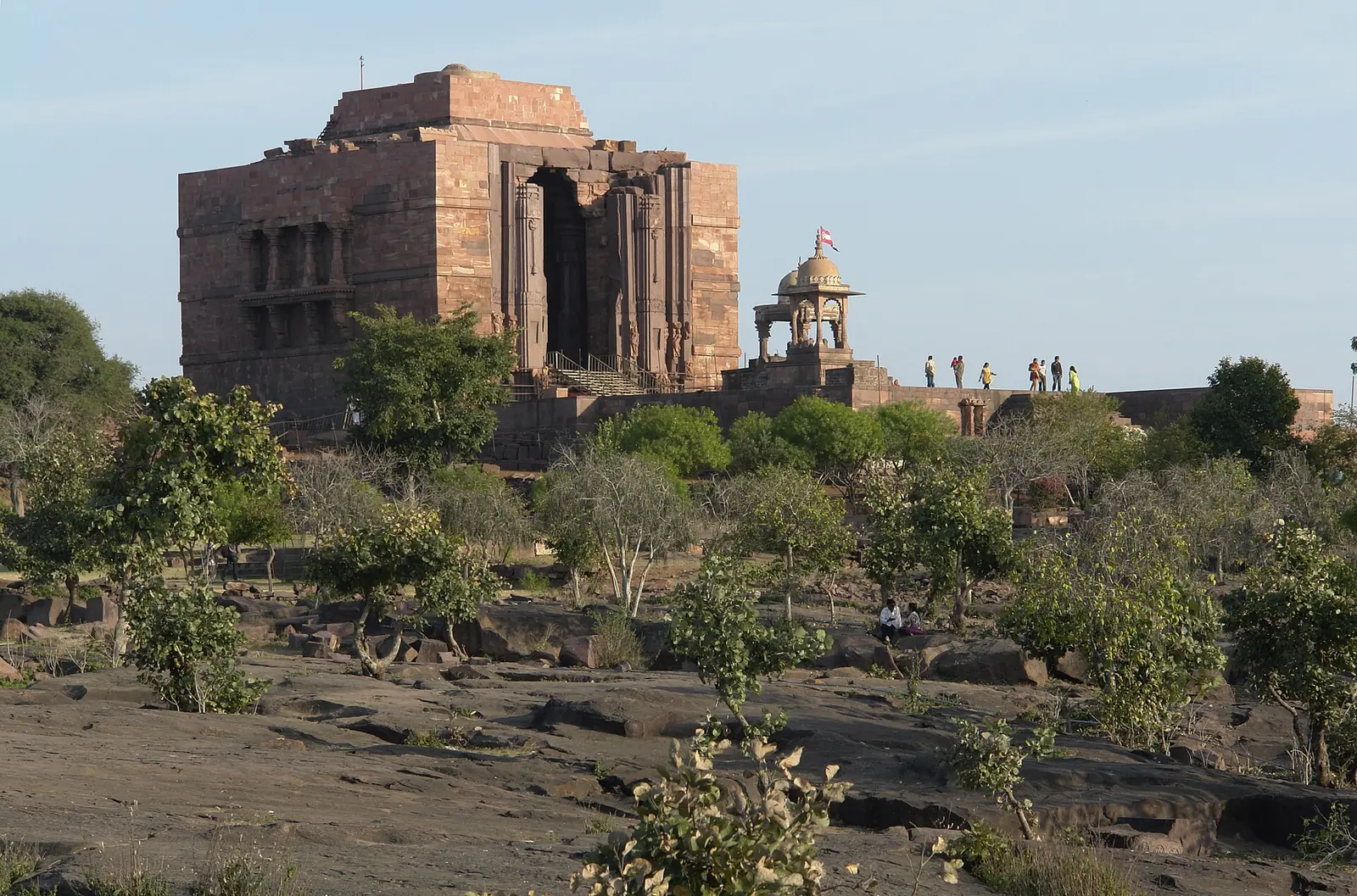
Help came from an old enemy. The Chalukyas of Kalyani did not want Karna’s power on their northern border. Bilhana’s Vikramankadevacharita says the young prince Vikramaditya, later Vikramaditya VI, restored the fugitive king of Malava to his throne, and a grant of Jayasimha I from Mandhata shows a Paramara ruling again within a year or two. The quarrel among the allies over the spoils is a theme of the later Jain prabandha stories. Bhoja’s unfinished Shiva temple at Bhojpur, with its single great linga, is the best known of his works still standing.
The war ended the age of Bhoja and showed how the great Rajput-era kingdoms of the eleventh century wore each other down on the eve of the Ghurid invasions.