
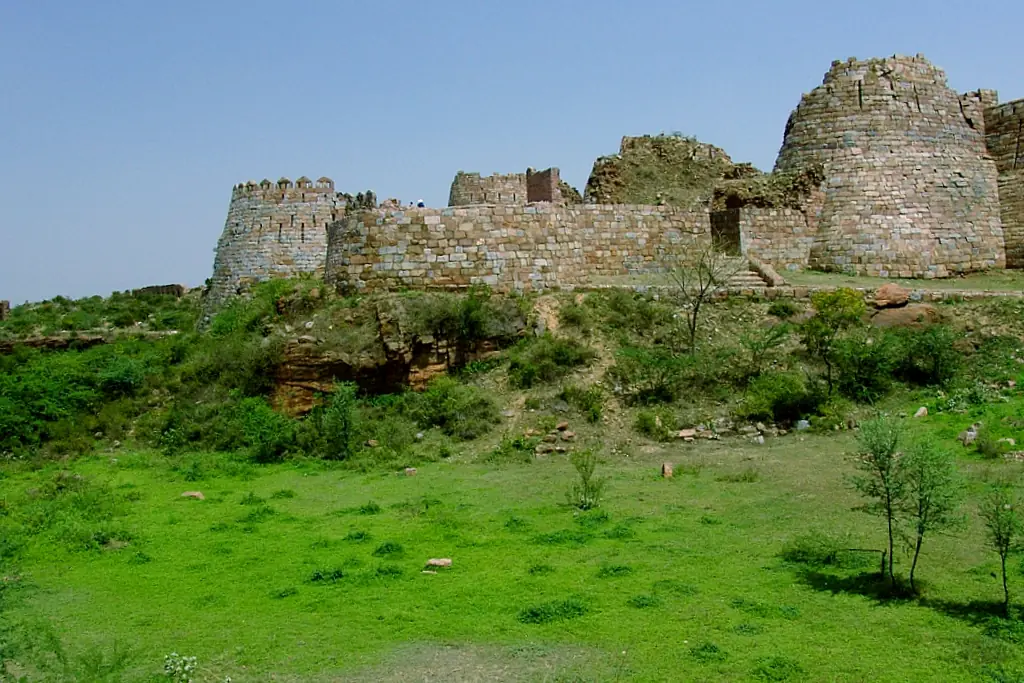
Tardi Beg fled, Hemu took Delhi and was crowned with the title Vikramaditya.
01Agra, then Delhi
Humayun died in January 1556, leaving a boy of thirteen, Akbar, in the Punjab. Hemu, a man of Rewari who had risen from the market to be chief minister and general of Adil Shah Sur, had already won a long run of battles against the Sur family’s rivals. He marched west, took Agra, whose Mughal governor fled, and came on to Delhi. Tardi Beg Khan met him at Tughlaqabad. Hemu held his best elephants and troops in reserve; when part of the Mughal army broke his front and scattered to plunder his camp, he fell on Tardi Beg’s own division with them, and the Mughal governor fled north.
02Raja Vikramaditya
Hemu entered Delhi and, the Mughal and Afghan chroniclers agree, took royal state with the title Vikramaditya, the name of the legendary king of Ujjain. Abul Fazl, writing for Akbar, calls him the ill-starred Hemu, but cannot hide that he held Delhi and Agra. The reign lasted a month. On 5 November 1556 Bairam Khan and Akbar met him at Panipat; an arrow struck Hemu in the eye on his elephant, his army broke, and he was captured and beheaded.
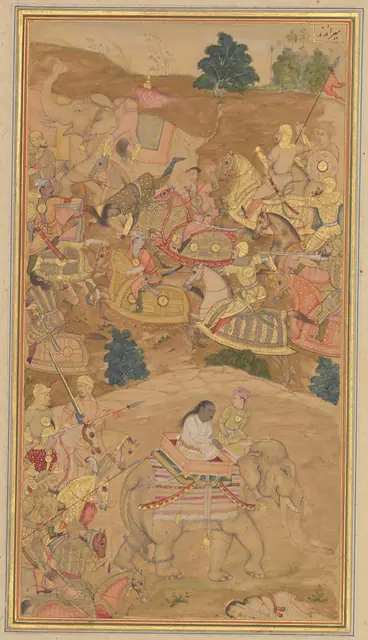
Tughlaqabad brought a Hindu king to the Delhi throne for the only time between the twelfth century and the Maratha age, and nearly ended Mughal rule in its first year under Akbar.