
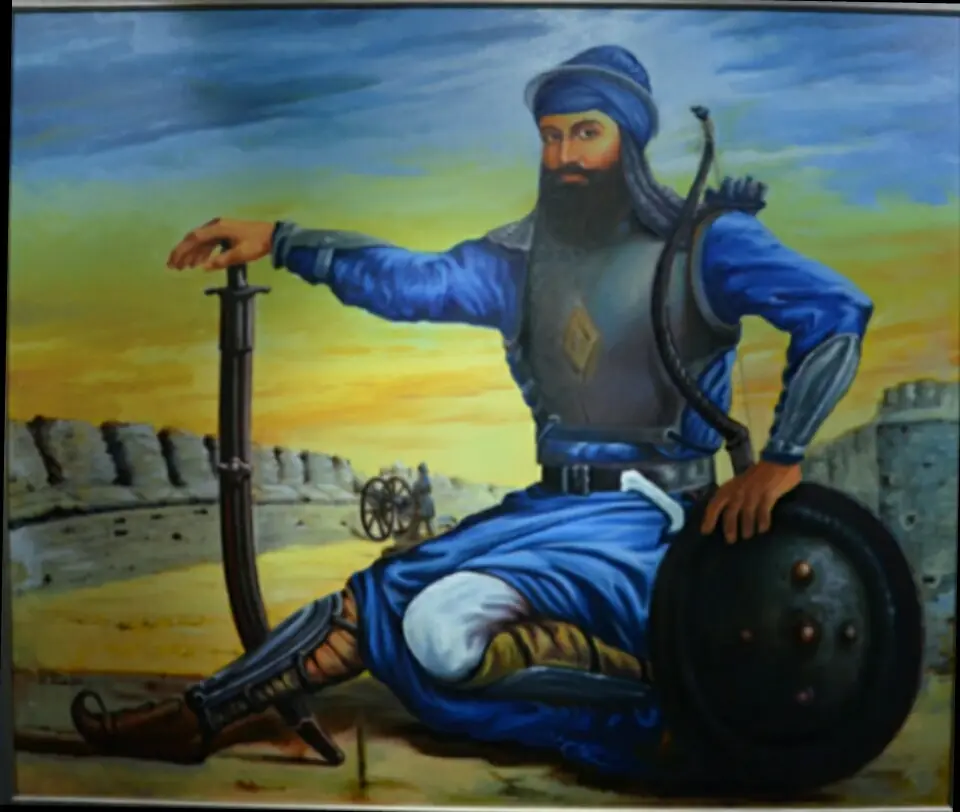
Samana was stormed and sacked with great loss of life; it was the Khalsa’s first major victory under Banda Singh.
01The Guru’s commission
At Nanded in 1708 Guru Gobind Singh gave the bairagi Madho Das a new name, Banda Singh, five arrows and a council of five Sikhs, and sent him north to punish the persecutors of the Panth. Banda reached the country around Sonipat in 1709, and his hukamnamas brought Sikh peasants flocking to him. By the autumn he had several thousand men. He chose Samana as his first great target, a walled town of the Sirhind sarkar. Ganda Singh, the historian of Banda Singh, notes that Sikh memory held it to be the home of Sayyid Jalal-ud-din, executioner of Guru Tegh Bahadur at Delhi, and of the two men who executed the younger Sahibzade.
02The storm of the town
In November 1709 the Sikhs attacked Samana before its defenders could gather. The town was taken in a day and sacked, and the slaughter was heavy; Ganda Singh and the Persian historian Khafi Khan both record great loss of life. Banda appointed Fateh Singh as the Khalsa’s governor of Samana. From there the Sikhs took Ghuram, Thaska, Shahabad, Mustafabad and Sadhaura one after another, and in May 1710 they met Wazir Khan of Sirhind at Chappar Chiri.
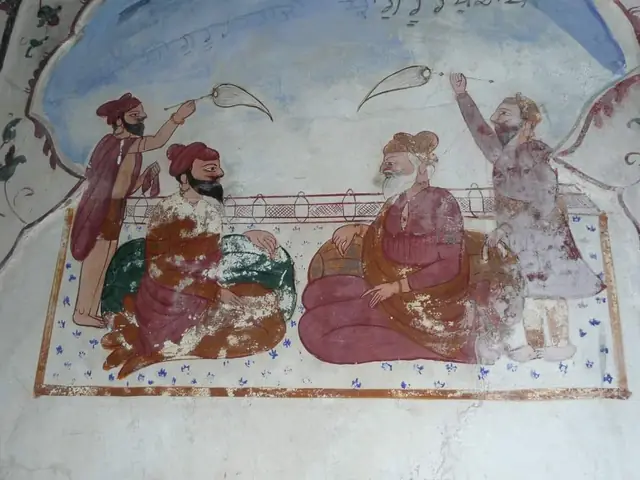
Samana opened Banda Singh’s campaign, the first time Sikh peasants took and held Mughal towns and set up their own administration in the Gurus’ name.