
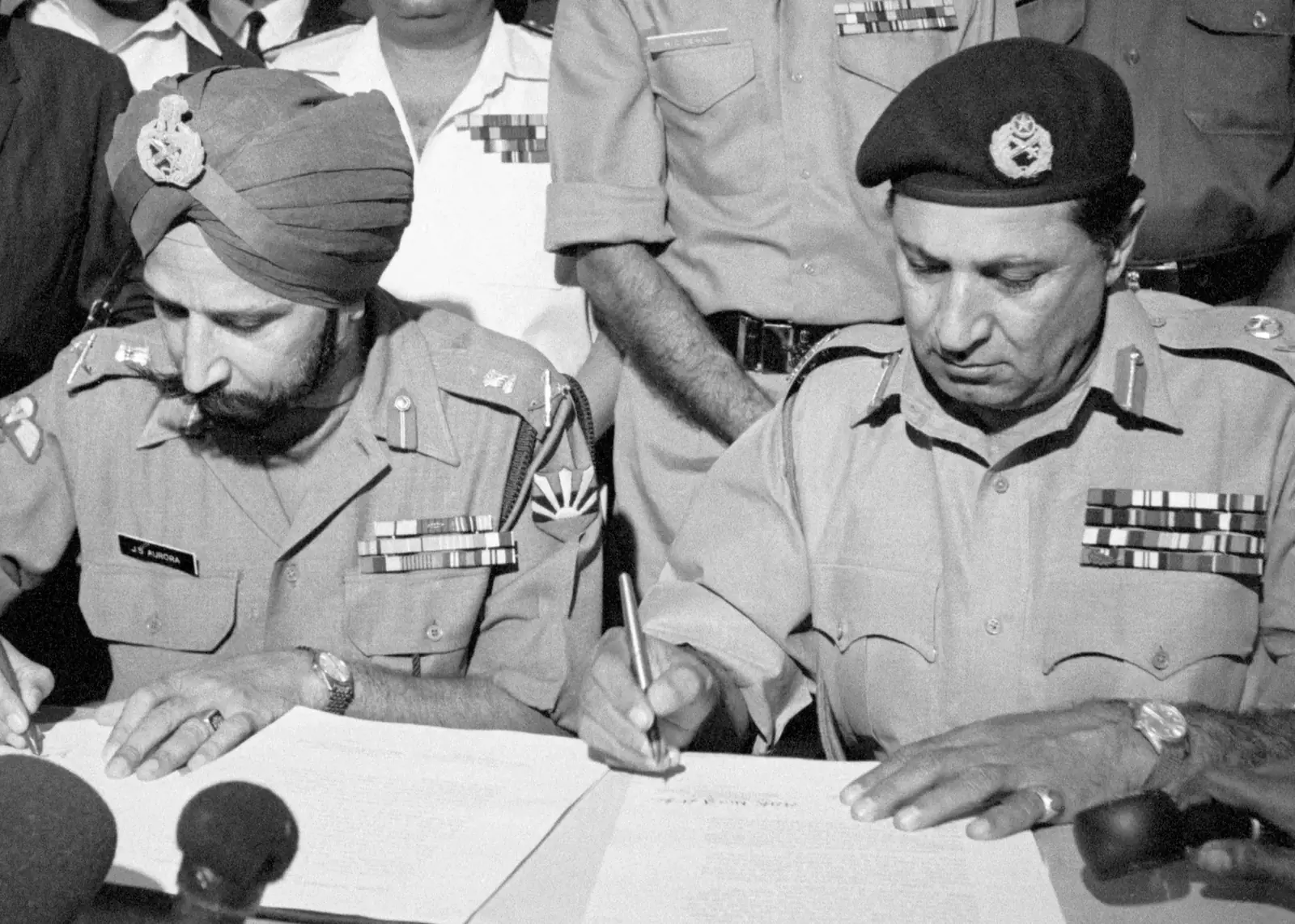
On 16 December 1971 Niazi surrendered in Dhaka with about 93,000 men, and Bangladesh became free.
01Operation Searchlight and the refugees
Sheikh Mujibur Rahman’s Awami League won the 1970 election, but the generals in Islamabad would not hand over power. On the night of 25 March 1971 the army launched Operation Searchlight in Dhaka against students, Bengali police and the Hindu quarters. The killing spread across the province. Hindus were singled out: the American consul general in Dhaka, Archer Blood, headed a cable of 28 March Selective Genocide, and US Senate inquiries recorded the Hindu minority as especially targeted. Estimates of the dead range from three lakh to thirty lakh. Some one crore refugees, most of them Hindu, crossed into India.
02Thirteen days to Dhaka
India trained and armed the Mukti Bahini through the summer and waited for the dry season. On 3 December Pakistan’s air force struck Indian airfields in the west, and India declared war. In the east Indian columns bypassed fortified towns and raced for Dhaka with Mukti Bahini guides, while the navy blockaded the coast and bombed Chittagong; in the west the line held, at Longewala among other places. On 16 December, at the Ramna Race Course in Dhaka, Niazi signed the instrument of surrender before Jagjit Singh Aurora, the largest surrender of troops since the Second World War.
1971 created Bangladesh, ended the threat from Pakistan’s eastern wing, and stands as independent India’s most complete military victory.