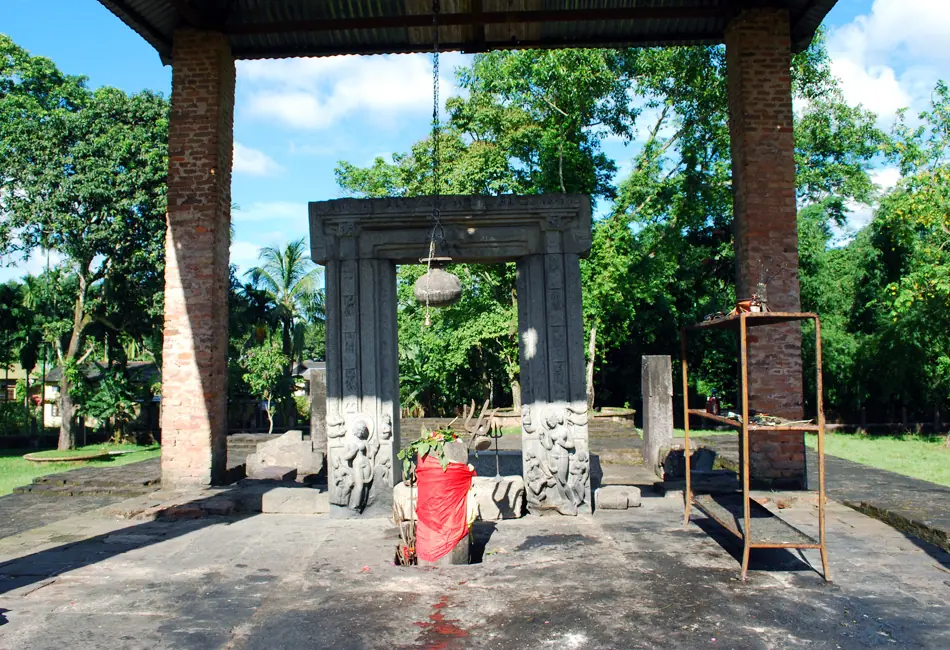
01The doorframe
Excavations in 1924 uncovered, beneath the ruins of an Ahom brick Shiva temple, the stone base and doorframe of a far older shrine. The doorframe is carved in the style of the Gupta age: the river goddesses Ganga and Yamuna stand at either side holding garlands, with attendants and geese, and bands of foliage climb the jambs. It shows that temple building of the classical north Indian kind had reached the Brahmaputra valley by the 6th century, under the Varman kings of Kamarupa.
02Two temples on one plinth
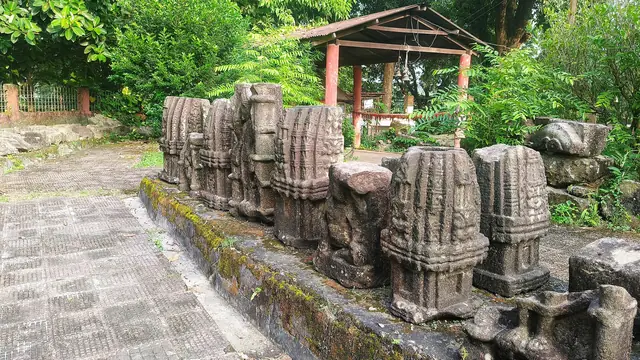
Over the old foundations the Ahoms later built a brick temple of Shiva, of which the paved floor of the sanctum and hall remain. The site is protected by the Archaeological Survey of India; the doorframe stands where it was found, in a small enclosure among the village houses. It is one of the treasures of Assam’s archaeology, and photographs of its Ganga and Yamuna appear in almost every account of the art of Kamarupa. Visitors usually see it with the Bamuni hill ruins and the Agnigarh hill in Tezpur on the same day.
The life of this place
- c. 6th centuryThe stone temple with the carved doorframe is built.
- 1924Excavation uncovers the doorframe beneath the Ahom ruins.
About 5 km west of Tezpur; a short stop on the way to Mahabhairav and Agnigarh.