
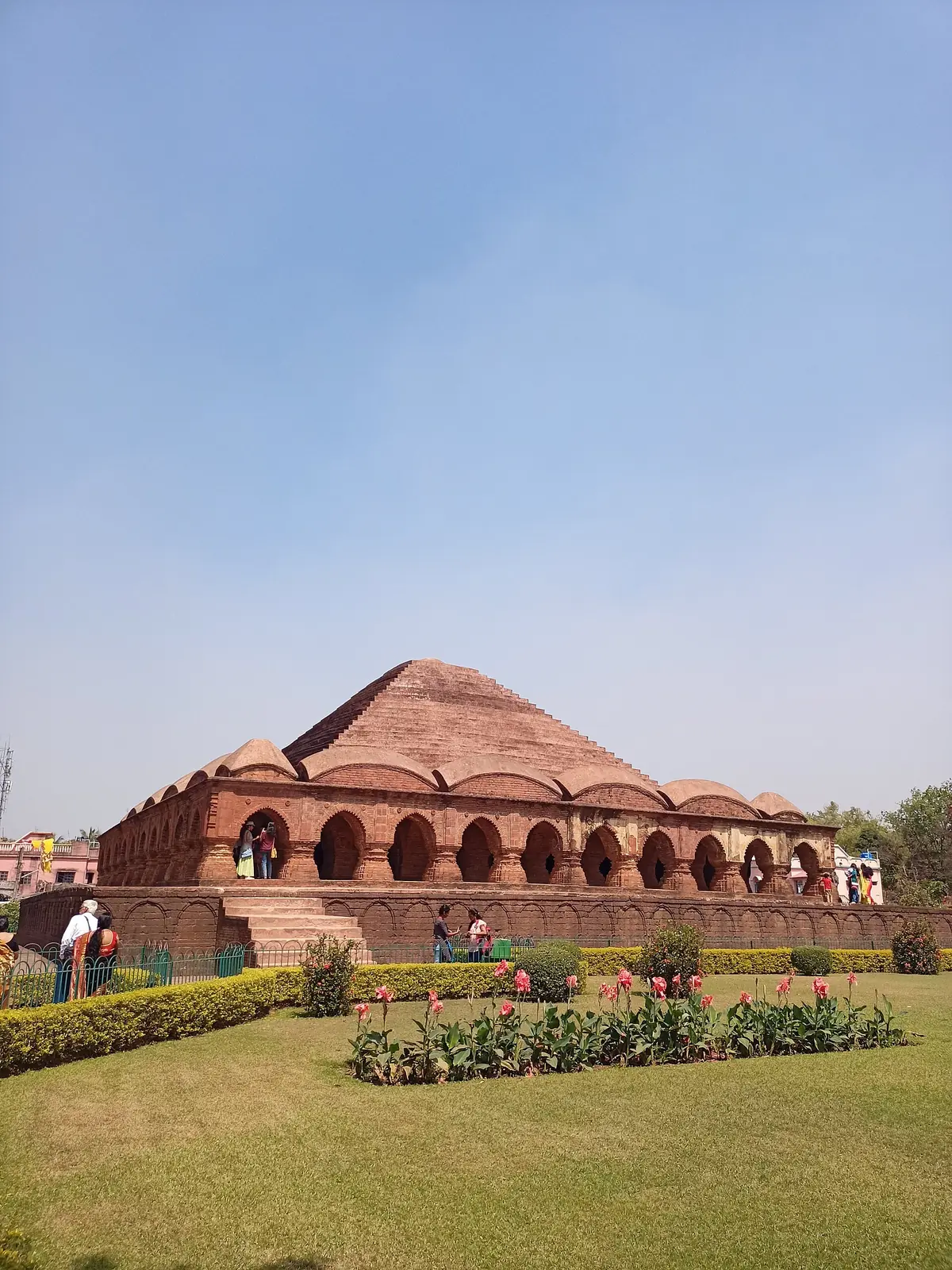
Bengal: brick and terracotta
West Bengal, Bangladesh, parts of Bihar and Assam · 16th–19th century
The Bengal delta has little stone, so its builders worked in brick and baked clay, and they took the form of their roofs from the village hut. The chala roof curves down at the edges like thatch: do-chala with two slopes, char-chala with four, at-chala with eight in two tiers. The ratna temple sets one, five or nine small towers, the pinnacles, on a square body. Walls are faced with terracotta panels moulded with Krishna-lila, the battles of the Ramayana, Durga slaying Mahishasura, boats, hunts and European soldiers.
Bishnupur, under the Malla kings, is the great centre: the Rasmancha of about 1600, the Shyam Rai of 1643 and the Jor Bangla of 1655 still stand. Dakshineswar, completed in 1855 by Rani Rashmoni, is a nava-ratna of nine spires, and the Kantajew temple at Dinajpur, finished in 1752, is the most richly decorated of all.
How to recognise it
- Curved chala roofs taken from the thatched hut
- Ratna temples with one, five or nine spires
- Moulded terracotta panels of Krishna-lila and the Ramayana
- Brick construction on a raised plinth
Great examples
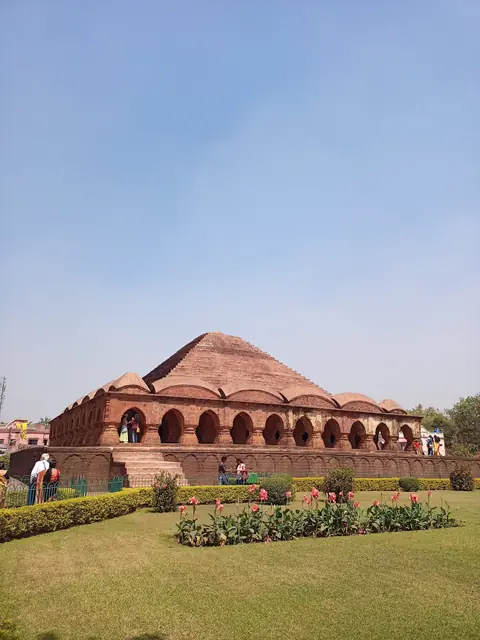 Standing
Terracotta Temples of Bishnupur
The capital of the Malla kings, who became devout Vaishnavas and covered their brick temples with terracotta panels of the Ramayana, the Mahabharata and Krishna-leela.
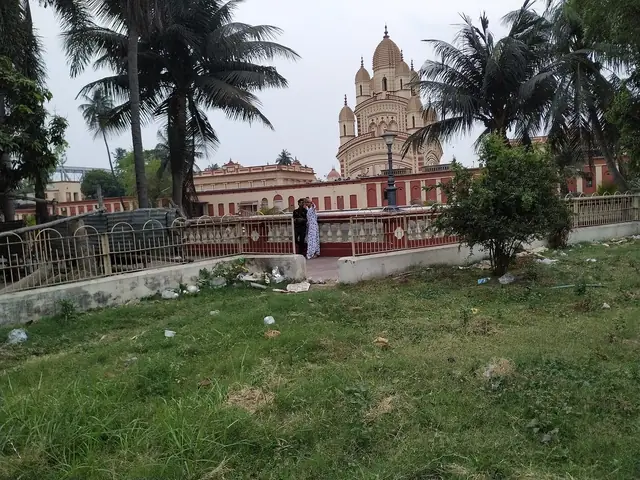 Standing
Dakshineswar Kali Temple
The navaratna temple of Kali on the Hooghly that Rani Rashmoni built, where Sri Ramakrishna served as priest and lived for some thirty years. Here Narendranath Datta, later Swami Vivekananda, came to him.
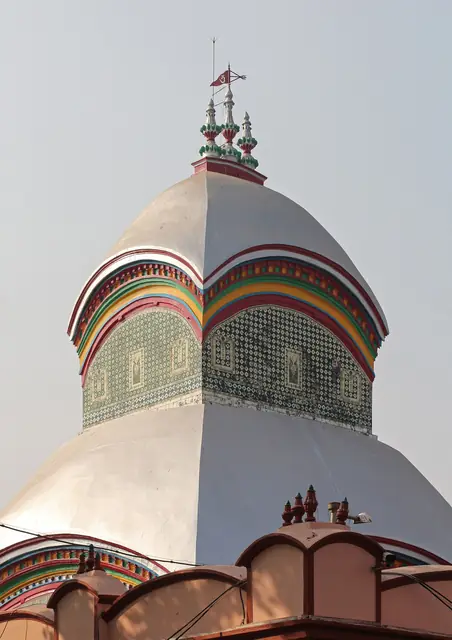 Rebuilt
Kalighat Kali Temple, Kolkata
One of the Shakti Peethas, where the toes of Sati’s right foot fell, on the old course of the Ganga called Adi Ganga. The city of Kolkata is said to take its name from Kalikshetra.
 Rebuilt
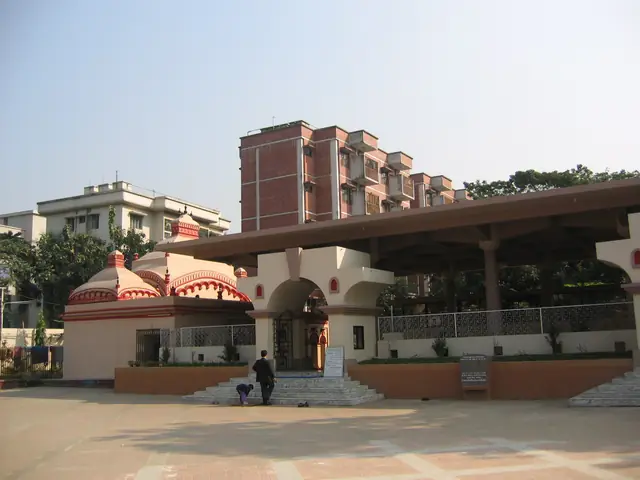
Dhakeshwari National Temple
The Devi temple that the city of Dhaka is often said to be named after, and the National Temple of Bangladesh. Its original murti was taken to Kolkata after Partition.