
The north was annexed; the southern kings were captured and set free as tributaries.
01Harishena’s list
The prashasti, cut on the same pillar that carries Ashoka’s edicts, now in the Allahabad fort, names names. In Aryavarta he violently uprooted Rudradeva, Matila, Nagadatta, Chandravarman, Ganapatinaga, Nagasena, Achyuta, Nandin and Balavarman. In Dakshinapatha he seized and then freed Mahendra of Kosala, Vyaghraraja of Mahakantara, Vishnugopa of Kanchi and others. The forest kings became his servants. Samatata, Davaka, Kamarupa, Nepala and Kartripura paid tribute, and the Shakas, the Daivaputra Shahi Shahanushahi and Simhala sent gifts and embassies.
02The horse sacrifice
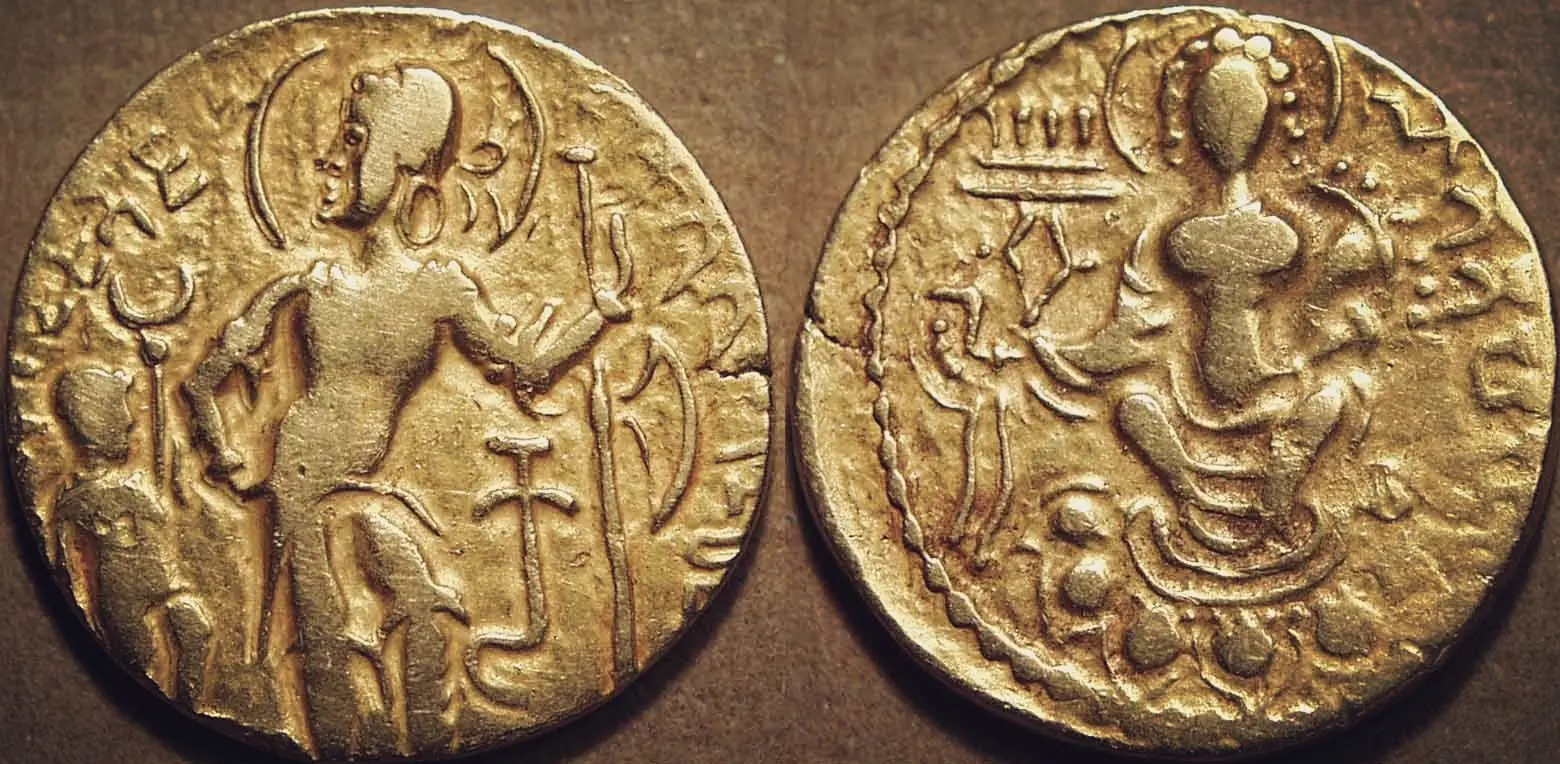
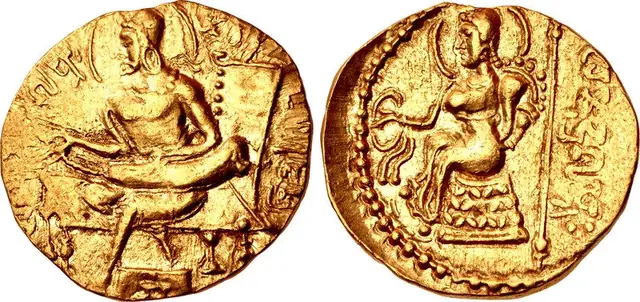
After the wars Samudragupta performed the Ashvamedha. His gold coins of the Ashvamedha type show the sacrificial horse before a yupa, and on the reverse the queen with a chamara and the legend Ashvamedha-parakramah. Other coins show him playing the veena, a reminder that Harishena praised him as a poet and musician too, Kaviraja, king of poets. The pillar itself, carved with Ashoka’s edicts and Samudragupta’s praise, later received a Persian inscription of Jahangir as well.
These campaigns built the Gupta empire, the frame of the age that gave Bharat Kalidasa, Aryabhata and the Gupta temples.